**Written November 5, 2008 for the Philippines Graphic
So, there’s one more addition to that old game, “Where were you when…?”As CNN announced that Americans had elected Sen. Barack Obama as the 44th President of the United States of America, my victory yell had nurses peeking into the room.
Days before Americans queued for hours, I knew November 4 and 5 would be spent in a hospital. I was ready, psychologically prepared, to lose my left breast. I just had to persuade my bemused surgeon, Dr. Tony Vasquez, to time the mastectomy so that’d I’d have regained full control of my faculties once the US count began.
By around 1 pm, Nov 5 (our time) CNN –in a blend of (slightly tacky) “Star Wars” technology and old-fashioned, hard-nosed journalism – announced Obama’s victory, just as the US Western states were closing their polls.The night before the elections, our very political family pondered: What would happen if enough fearful Americans bit the bait dangled by the McCain-Palin team? What kind of future would we wake up to, if Americans repudiated the man who’d already been acclaimed by the world as the next leader of earth’s most powerful nation?
Some of us worried and fussed, forecasting what a national daily would echo the following day: street parties or riots. A smaller faction waved off such fears. I was part of that group of idealists. As vociferous as we’d been in opposing many of the policies espoused by the US government, we’d always had this firm belief in America – the ideal and the people, and its capacity to summon the good from the wild and wooly depths of its politics.
I’d always believed in Obama since he first grabbed the limelight in his breakthrough Democratic Convention Speech of 2004, where he said there were no red states or blue states, just the United States of America.
His message has not changed. It remains inclusive. It remains rooted in the ethics of hard work instilled by a white grandmother. While it is charged with hope, it unflinchingly faces the hard realities of his country, the same country where a white woman could climb the corporate ranks from secretary to vice president, and raise and nurture a black child to adulthood, and yet retain some vestiges of fear for his colored brothers.
That Obama – disciplined, calm, with the voice that at once soothes and invigorates – best represents the modern American who does not pretend to ignore the cracks that wind through the body politic but, rather, believes that his or her counterparts from across the aisle are also imbued with the same good will.
It was the same noble sense of fairness that belatedly returned to John McCain, the old war horse who’d almost destroyed his reputation trying to pander to his party’s right fringe — best represented by lipstick-wearing pit bulls and Christians so lost in the wilderness they think sharing is synonymous with communism.As for the rest of the world – that’s us, folks – Obama said the results of the 2008 election should convince all of those who have wondered whether America had permanently switched off the torch of justice and liberty.
More than the might of arms, more than the shock and awe and the long arm of rendition, the sight of millions of Americans lining up patiently in schools and churches – many for the first time – highlights what Obama calls the enduring power of American ideals.After eight very long years of Dubya, we can only pray that Obama is right in saying that the true genius of America is, that America can change.
(Four years. It hasn’t been perfect… but I still believe in Obama. It is not the case of him being the lesser of two evils. After four years, I still think this holds true: “His message has not changed. It remains inclusive. It remains rooted in the ethics of hard work instilled by a white grandmother. While it is charged with hope, it unflinchingly faces the hard realities of his country, the same country where a white woman could climb the corporate ranks from secretary to vice president, and raise and nurture a black child to adulthood, and yet retain some vestiges of fear for his colored brothers.”
“I Admire Grace ever since. I don’t understand the lapses in judgement here and the memory lost in delicadeza. Maybe we should ask for contribution here to pay PNOY his money back.I am willing to donate. She should owe the Filipino alliance and not one party.Kahit I support that partido ang mali ay mali . Kahit saan angulo eto tingnan Mali talaga!”
I highlighted that on a Facebook post and there was stream of enthusiastic replies. Three friends immediately pledged P1,500. Ian Laput and Mae Paner, good friends of Padaca and members of Kaya Natin (the group of the late Secretary Jesse Robredo), chimed in:
Everyone seemed to understand the stakes. A good woman was being sucked into patronage politics — on the eve of joining a constitutional body mandated to be rise above patronage politics. Many folk like Grace Padaca. They want to continue believing in Grace. As Laput says: “I want her to succeed — cleanly”.
Many were disappointed at her acceptance of bail money from President Benigno Aquino III. But few were willing to write her off. Blogger Pedro Jacobo (Political Jaywalker/Pedestrian Observer) asked: “Should we subject good people like Grace Paaca to a higher degree of culpability?”
From the United States, lawyer Merit Salud stressed:
“It is not the personal character of the recipient that gave rise to the issue but rather the public position of the benefactor and the consequent public position accepted by the recipient from the benefactor that triggers the question of delikadeza to be raised. Has she or has she not compromise her position of neutrality under the circumstances ? I adore Grace and precisely because we adore her that we raise this question. There are almost 100 million filipinos. and we could not even have more than our fingers the number of people we adore like her for public service.”
People felt Shawn’s suggestion was a way to salvage the situation. Political comedianPaner: ” 1k from me para tubusin si grace from PNoy. w love!”
Salud says:
“Sama ako dyan, basta wag magresign si Grace ! I know she has not compromised her objectivity with what happned. There are many people here I know who believe in the goodness of Grace as a public servant.”
Photojournalist Jun Sepe — Piso-piso lang yan! What’s 70,000 supporters? Great suggestion! It’ll show PNoy too… =) He later suggested leaving a fishbowl outside the Philippine Press Institute (PPI) office in Intramuros and offered to deliver it to the offices of the official “collector”.
WHERE TO SEND
On consensus and following an offer by author, artist, curator Marian Pastor Roces, the Pipol Power Institute was appointed official recipient of the “SAVING GRACE” funds. The aim: to return to the P70,000 bail money to President Aquino and give the rest for her legal defense. Padaca faces two cases for graft and malversation of public funds.
Marian Pastor Roces: “if we pipol power a remedy, we can assist a good woman like Grace keep her head above the fray”
Marian Pastor Roces Pipol Power Institute can receive your contributions at: Pipol Power Institute, 2nd Floor, Ang Bahay ng Alumni, University of the Philippines, Diliman, Quezon City. FYI PPI’s Chair is Jim Paredes, President is Noel Garth Tolentino, and trustees include Mae Paner, Dr. Ruby Alcantara, and myself and others. It is an NGO. Contributions for Grace Padaca reimbursement to PNOY will be given an official receipt. I will personally turn over the sums to Grace and give a report to all contributors.
Another trustree, Kay S. Bunagan gave the group’s current account details: Hi everyone! I’m one of the trustees of PPI. Our account information is: BDO Berkeley 003578008350, Pipol Power Institute, Inc. Kindly email us at pipolpowerinstitute@gmail.com andattach a picture or scanned copy (if possible) of your deposit slip after you deposit so we can track the transactions and issue receipts when needed.
Kay S. Bunagan For those who want to drop off donations at the office, kindly text or call Tita Ruby G Alcantara first, 0939-922-6140. She’s our corporate treasurer, a professor at the UP Filipino department. Thanks!
“Ang puna na may kasama pang ambag! ang taas na talaga ng level natin ng propriety! why not!” Paner crowed.
There were sceptics, of course. Rolando Rico Olalia felt “no amount of reimbursement can clean the already tainted integrity.” Butch Ruiz Baliao : unanuna, bakit tinanggap ni padaca yung alok?? at meron pang matching escort ni roxas??ANO BA YAN????(in bold letters,hehe)
Yes even as he cast doubts on the cause of saving Grace, Baliao was also giving suggestions — perhaps simply in empathy for more hopeful peers.
Butch Ruiz Baliao : if some people want to save padaca, i think the best way is not to ask her consent at all..that’ll put her in an awkward position. just do it.
Among those willing to save Grace:
Anna May Hipolito I am willing! However good Grace Padaca’s intention is, accepting money from Pnoy will forever cloud her performance at the Comelec. Mabuti na yung walang utang na loob..
Sylvia Morningstar I repeat Pedro Jacobo’s question: where do we send our contribution?
Jun Sepe Piso-piso lang yan! What’s 70,000 supporters? Great suggestion! Let’s show PNoy WE ARE THE BOSS!!!
As the original proponent says:
Shawn Monique Tantengco Kung ethics ang pag uusapan dito. She should have asked the filipino people. Kahit barya baryamag bibigay ang filipino, basta para sa prinsipyo at paninigigan. Kung yun ang ginawa nya Irerespeto sha ng mga tao. Now the damage has been done! Kung ako na Dilaw, nag isip sa motibo papano pa ang yung mga Masa!!
And so we’re off… saving grace, saving integrity and, yes, saving people’s hopes.
Former Isabela governor and newly-appointed Comelec Commissioner Grace Padaca. (Photo courtesy of abs-cbnnews.com)
Former Isabela governor Grace Padaca has spoken. The newly appointed Commissioner of the government elections body, has also posted bail for two charges — graft and malversation of public funds. Following Malacanang’s announcement of her appointment, the Sandiganbayan confirmed there was a warrant of arrest for Padaca. Cops had tried – but failed – to serve the warrant.
People raised questions over the propriety of her appointment.
She was facing graft charges; didn’t these count?
Why hadn’t she turned herself in?
Can she be trusted to pass impartial judgment on former rivals?
Padaca’s graft case does NOT disqualify her from becoming Comelec Commissioner. Last I checked, people in this country remain innocent until a court of law hands down a guilty verdict. Padaca must come under that same standard, even if the administration she serves has a penchant for treating people as guilty until proven otherwise. (Except for a list of kaibigan, kamaganak, kaklase)
Is there a difference between evading the law and simply not entrusting yourself to its tender mercies? In previous interviews, Padaca has said refusal to file for bail was a statement, a form of protest against an unjust legal system stacked against her. Nothing unique there. Many have gone before her.
People wanted to understand:
Why the change of heart?
What had changed in the system that made her now amenable to filing bail?
Had the legal system changed that much under the “tuwid na daan” regime?
What changes singularly applied to her case?
Padaca’s press briefing after posting bail hardy eased those concerns. Thus, my Facebook post:
Grace Padaca press con on ANC. “Kung meron kang Secretary Mar and President Noynoy sa tabi mo”. My heart plunged… not begrudging Grace her powerful friends… just thinking of the millions who have to suffer injustice by their lonesome.
And unsolicited advice to Grace: PLEASE DO NOT EVEN TALK OF THE LIBERAL PARTY — WITH MAR ROXAS BESIDE YOU. For god’s sake, you’re joining the COMMISSION ON ELECTIONS!
Mutual friends prodded Grace to answer the questions. Mid-afternoon, Grace posted this reply on my wall – and other walls that had carried my post.
It’s straightforward, brisk, but with a personal touch. Let’s break it down into segments:
“Hi everyone. Sorry hindi agad ako nakasagot. I was busy talking with my lawyers before the posting of the bail. Last week, my lawyers updated me that the prosecution has yet again asked for another extension to comment on our petition for certiorari in the Supreme Court. Ang ibig sabihin, after 4 long months, wala pa palang iniusad ang petisyon ko to dismiss the case, not for any fault of the supreme court, but by “inaction” from the other side. “
I hear her. Four months IS a long time if you’ve got a warrant over your head. (Tens of thousands languish in jail for lack of bail funds. Thousands remain in prison even with orders for their release. How’s that for context?)
JUSTICE DELAYED. CDO-based journalist Herbie Gomez behind bars for libel. Ten years — no hearing.
Grace chafed for four months. Cagayan de Oro journalist Herbie Gomez has been waiting to be cleared of libel for a decade now. Not a single court hearing after an arrest warrant served in May 2003. No hearing — no acquittal or conviction. Limbo. So, yeah, Grace, di ka nag-iisa.
Grace comes from a personal place… and so do all of us. She is a public official and must realize that all her worlds and actions will be funneled through a million other personal lenses.
While sharing her legal travails, did Grace spare a thought for what could happen if “ordinary” citizens – those without organized groups or powerful folk backing them – fall to the Anti-Cybercrime Law?
I want to believe she did. But she probably can’t talk about this for fear of displeasing her padrone.
“I was advised by my lawyers to just post bail because 4 months is too long to be always under the threat of a warrant of arrest and there seems to be no movement yet. Also, this Comelec appointment happened. Magiging complicated naman yata kung papasok ako sa Comelec na any moment, maaresto ako. That may distract many from the things that the Comelec should concern itself with.”
Reading this for the fourth time. I’m still stumped. It is the Comelec appointment that makes a difference? Without this appointment, would Grace have gone her merry way – interviews and speeches and just keeping a spare bag in the car for when cops finally swoop down?
“As to my statement “with noy and mar by my side…” lets please check the context and see why i said that. But if that was not proper because I am with the Liberal Party joining a body that must be impartial, I will be more cautious next time. “
Thats also one of the reasons why i refused all interviews about the comelec appointment for almost 3 days. Alam niyo naman kung gaano karami at kakulit ang media. I only hastened to answer questions on the court case kasi maraming maling akala. Ang tagal ko na kayang nag-status update sa 3 facebook accounts ko about the court cases, pero syempre dahil hindi naman ako person in the news, hindi masyadong pinansin. If u want, u can check my posts especially last june 2012.
Maraming salamat, ramdam ko na pume-preno kayo sa pagbatikos sa akin because u are giving me the benefit of the doubt. I deeply appreciate it. Sana, sa mga darating na panahon at pagkakataon, makikita niyo sa mga desisyon ko ang aking hindi pagkiling sa kung sinoman kung hindi sa tama lang at katotohanan. As a broadcast journalist for 14 years, i had a lot of practice practising fairness, neutrality and yes, integrity. As governor, kahit mga political opponents ko na mayors at kapitan na dating ayaw sa akin, nakipagtulungan din dahil nakita nilang objective ako sa pagtrato sa kanila.
The comelec mission will be very hard , i know, but extremely important, too. Please pray for me and support me, both by uplifting me when im down and whipping me (ouch!) when i become careless and un-Grace…
The Comelec Chairman Brillantes hems and haws over the appointment of Grace Padaca as commissioner. (Photo grab, abs-cbn)
I understand you’re not rich. You were like the millions of other people charged for lesser crimes languishing in jail for lack of bail funds. But, yes, you must forget your Liberal Party friends once you start Comelec duties. Sabi nga sa radio ad, di na kailangan pang imemorize yan.
“Ako po’y nagpapasalamat sa Pangulo. Hindi lang po yung halaga ng pera ang importante dun kundi yung ibig sabihin yung isang katulad ni Noynoy, isang katulad ni Mar,ay nandito at mas naniniwala ako’y hindi kurakot at walang ninakaw sa mamamayan,” she added.
Oh, we got the context, Grace. The context is what raises worries. Maybe you didn’t see the pattern.
Having someone believe in you is a powerful source of motivation when energies and courage flag in the fight for justice. But when your actions begin to hinge on the opinions and decisions of powerful backers, you face a slippery slope.
(d) Solicitation or acceptance of gifts. – Public officials and employees shall not solicit or accept, directly or indirectly, any gift, gratuity, favor, entertainment, loan or anything of monetary value from any person in the course of their official duties or in connection with any operation being regulated by, or any transaction which may be affected by the functions of their office. (boldface mine)
Kung pinahiram ka ng pera four months ago, noong “ordinaryong” mamamayan ka lang tulad namin, mas madaling maintindihan yan. Pero ang paghintay ng pag-bigay ng pera – at pag-pyansa – at pag-timing nito pagkatapos kang ma-appoint na Comelec Commissioner, malaki ang problema dyan, Grace.
No President of this country has ever been neutral in electoral politics. President Aquino has told Filipinos they should vote for his candidates if they believe in “tuwid na daan”. He and his motley crew of allies are determined to fill government elective posts with their people that they’re forcing local rivals to fall in line. That’s not illegal. It just makes more mind-boggling your belief that taking the President’s personal funds does not constitute conflict of interest.
Pet, photo from greencrossvet.com
TIES THAT BIND
Interior Secretary Mar Roxas should also give a full list of other donors – for money, he says, going to a legal defense fund. These people may be innocent, ‘ordinary’ citizens – or they may be officials of a political party or candidates.
Grace, ako may problema talaga sa nakikita ko. I see patrician gentlemen treating you as their personal ward. And you’re about to take your seat in an agency mandated to be independent and above the political fray.
Many of us believe in your record of integrity. However, the rules of public service are clear: it is not enough to invoke pure motives for one’s actions. Heck, all dictators believe they’re pure.
Your reputation as broadcaster was the springboard to public office. But we cannot view you through that prism anymore. You chose to be a public servant and must be weighed on that scale.
Some friends say, “see, they didn’t even hide the fact that PNOY gave her the money! That’s transparency!”
Yeah, or it can just be one more sign of arrogance. Astig kami. Heto! Ano gagawin nyo ngayon? Walang urungan! Walang uubra sa tuwid na daan! Kami lang ang nakakaalam kung ano ang tuwid na daan! And there is silence from friends who ought to know better. That is why we ended up with this cybercrime controversy, Grace. Because everyone fears being struck down by the PNOY lightning bolt. Panahon ni George W Bush, patriotism and war on terror were the incantations. Ngayon sa atin, tuwid na daan.
The morning after… wrong remains wrong. I’ll pray for your success. I’ll praise every right move. But I will not denigrate those who challenge your appointment. I cannot, knowing the facts you laid down.
This is the dream that drives citizen journalism. It’s an old slogan. And it’s one that continues to ring true.
Citizen journalism is all about expression, an urge that goes way, way back in time. Expression allows human beings to wrest order from chaos, make sense of tragedy and draw blueprints from a shared experience.
Throughout history, expression has always run into a counter force. The world has never lacked for individuals or institutions eager to justify a clampdown on expression or, at least, filter this through a dominant lens.
But human beings have always managed to wriggle through the censors’ nets. The Inquisition, colonial rule, martial law or China’s great firewall — people found a way to tell their stories.
OUR TURN
Citizen journalism was conceived as protest against the over-centralization of media and our perceived failure to reflect the audience’s reality. It aims to bring more focus on authentic voices and forms of expression.
The plaint is valid on many levels: Rating and circulation wars, advertising pressure and ownership structure may influence the news agenda.
Technological innovations broke the media’s near monopoly in the gathering, processing and mass dissemination of information. Citizens — our public — then grabbed the chance to tell their stories in their own voice, from their perspective.
After the initial shock and discomfort, journalists welcomed these new voices. Because let’s face it, even under ideal conditions, a media company – no matter how rich or big, cannot be everywhere, all the time.
Photo courtesy of abs-cbnnews.com
Journalists weren’t around to record the Maguindanao massacre. Those who were on site were dead.
Sure, authorities would have eventually announced the facts of these murders. We would have seen shots of body bags, grieving families, heard figures on extrajudicial killings.
But one picture plucked the massacre from the cold morgue of statistics and created an emblem for impunity. One picture; sent by a Bayan Patroller, an anonymous citizen journalist.
ONDOY & CROWD SOURCING
Just before that, in September 2009, Typhoon Ondoy took media by surprise. Our news teams were trapped – like everyone else.
But almost simultaneously with the first frantic phone calls, came a sea of photos and videos — sent through mobile phones.
In those crucial hours, citizens stepped into the breach, reporting from areas media vans could not reach. Citizens became field reporters as they waited for rescue on their roofs, ledges and wherever they had taken refuge from rising waters.
During Ondoy and Pepeng – the typhoon that swept through central and northern Luzon as the national capital struggled to recover — citizen journalists generated more than 10,000 photos, video clips, text and voice and email reports.
Citizens with access to power helped media vet raw information and come up with visual guides for rescuers.
Citizens told media – and the government — where help was most needed, where relief was not getting through. They advised volunteers on which NGOs had too many helping hands and which needed more warm bodies to pack relief packages.
Reporting on this complex process, broadcasting and uploading almost every step of the way, is called crowd sourcing. Ondoy was the first real display of the power a mass of citizen journalists could generate.
LESSONS LEARNED?
After the debacle of Sendong — when some key officials of the Aquino administration were caught napping and fussy protocol became an obstacle to disaster management — the government’s more savvy communicators started to reach out to the millions of Filipinos on social media.
We hear talk of private-public cooperation, but this, I believe, is by far the most meaningful. The goal: Saving lives. Mahar Mangahas, the badly treated staff of Pag-asa; the MMDA, Undersecretary Manolo Quezon, Tonyo Cruz, a host of citizen and professional journalists — all worked together to create a massive alert network.
Later on, Quezon would even invite bloggers’ networks and citizen journalists, including Bayan Patrollers, to give their assessment on what aspects of disaster management had improved and what remain problematic.
The more visible disaster mitigation agencies have since tweaked their communications systems: junking jargon, for example, in favor of simple, graphic terms that even kids understand.
Some do get it. It makes you wonder then — why a mass of people deemed critical in the business of saving lives would soon after be treated as the enemy. But I’ll get to that later.
WHO IS THE CITIZEN JOURNALIST?
There was a time when only the media’s imprimatur conferred an event with the status of news. We were the only gatekeepers. Everyone came to us for access to news platforms. Think of the world as a bar and we, the bouncers.
Not anymore.
In our absence, people can – and will — tell their stories. They will fill the vacuum. Social media is their platform.
Tens of millions of Filipinos use social media. But not every social media user is a citizen journalist.
Expression is a basic right and opinions are valuable –except to people who think their supposed moral purity negates any need for criticism. But expression isn’t enough. A citizen journalist needs to be a storyteller. You need to gather, process and disseminate your news. You may also add value the day’s news by linking events and their lessons to your life experience, giving insights others can relate to.
BRAVE, NEW WORLD
Citizen journalists train the spotlight from the macro to the micro.
A big rural bank in Laguna closed. Media knew nothing about it until Bayan Patrollers wrote that an entire local government bureaucracy had lost hard-earned savings.
Collage of photos by Bayan Patrollers
The websites of Phivolcs, the USGS, Pag-asa, nababaha give us critical raw data on earthquakes, typhoons and amount of rainfall. But citizen journalists, supplementing the work of professional journalists, ram home the magnitude, the breadth and depth of misery during natural disasters.
When we’re not around, citizen journalists are there.
Seamen record their rescue of Iligan residents swept off by Typhoon Sendong’s torrents.
A young businessman documents a New People’s Army raid on a Surigao mining camp.
Miners send images of a landslide.
A small village in Nueva Ecija sounds the alarm on a massive tree-cutting spree.
In newspeak, these are scoops. To many professional journalists, these are badges of glory. To citizen journalists, these are records of their lives.
FINALLY, VISIBLE
Social media and citizen journalism have also empowered overseas Filipinos. They used to be silent heroes, with an audience limited to kin and friends reached by tape-recorded messages sent by mail or hand, or expensive phone calls.
Social media has given them a voice.
OFWs in Libya, awaiting repatriation.
In Libya and Bahrain and Syria, they sped up government response by showing dramatic evidence of their plight amid conflicts or injustice, demolishing government attempts to sugarcoat the truth.
We were told no Filipino got hurt in the Bahrain street protests, in an Israeli bus stop blast.
Bayan Patrollers sent in photos and email narratives of Filipino casualties – and the less-than-responsive attitudes of some embassy officials. They showed that OFWs do not just complain; they dig deep into hard-earned savings, share their time and their lodgings with those in need of succor.
In Libya, seconds after an official claimed there were just 1,000 Filipinos left amid fighting a Bayan Patroller corrected that error.
There were 1,000 Filipinos, in Tripoli alone, he said. He gave the contact numbers of a priest who knew where Filipinos were huddled in distant desert camps, and patched us up with a labor attaché verified his the figures. From the besieged city of Benghazi, from many barracks on the sands, came photos and videos of how they coped amid fighting and rebel incursions and dwindling food supplies.
In Japan after the tsunami, from Irabaki, Chiba and Miyagi, Bayan Patrollers organized their communities and used social media and BMPM to help a beleaguered embassy’s rescue efforts.
In Fukushima, where the tsunami caused a melt down in a nuclear power plant, four caregivers sent a different narrative: They were staying put because conscience would not allow them to abandon elderly wards. Joie Aquino, Gemma Juanay, Sandra Otacan and Juliet Tobay would later be honored by the Japanese prime minister and, subsequently, by our own government.
It would take a book to enumerate the stories media would have missed without citizen journalists. I’ve just mentioned some breaking news.
ARMY OF CHANGE
The boom of social media has led to so much user-generated news reports and images that people are asking: With the tools of technology getting progressively cheaper, can citizen journalists replace the professional reporter?
The answer is, No.
But that’s not even the right question. The real strength of citizen journalism is engagement, the synergy created when professional journalists work with that army of change.
Bayan Patrollers do not just run to us for help. Our social pact calls for them to initiate that first step – approaching the appropriate government officials or agencies. As they gather and process their reports, we transfer some knowledge on governance processes, on laws, on other aspects of their stories.
See, perspective is both a strength and weakness in citizen journalism. Citizen journalists have enriched media, given us a more intimate world. They force journalists beyond our comfort zones and cookie cutter reportage.
Yet the raw reports by citizen journalists, especially on problems and conflict, need context and balance if we are to use these as springboards for change.
I cannot overstate the change that happens. Citizen journalists may start with one perspective – theirs. That’s natural. They’re talking about their lives. But among Bayan Patrollers, I’ve seen a chat or two work wonders.
Success is a great teacher. A report that brings change prods a Bayan Patroller to test his skills again. The second report is always way better than the first.
After a while, they become co-mentors on our Facebook page. They also begin to look beyond their villages and schools, reaching out to other communities that need help. And they do not stop with reporting.
Gaining confidence in expression leads to action.
Overseas Filipinos have used social media to spread good governance concepts and the idea of self-reliance and accountability in their hometowns. I’ve seen them chip away at dependency. In the past, with few tools of oversight, they were passive financiers of families and neighborhoods. With 24/7 communications, they have leveraged their economic power to change attitudes.
In San Miguel, Bulacan, OFs gladly shared their wealth to rehabilitate a perpetually flooded communal space. But they demanded equity from those back home – labor, project management, auditing. At the conclusion of the first phase, elevation, they took the project further. They built a playground and eventually, a multi-purpose hall – without a single centavo from the government.
In Sorsogon, an OFW on vacation pushed a village to volunteer money and time and physical strength to replace a washed-out passage to a bridge.
The blogger Reyna Elena coaxed hometown friends to organize a letter brigade that forced rehabilitation of road hundreds of school children use daily. A bigger group provided poor families with school kits.
ENGAGEMENT
Geography is no longer a hindrance to action. Strangers from different parts of the world helped track down a family of a Korea-based compatriot critically injured by an abusive partner. They raised funds to defray medical costs. They took turns as hospital watchers until her relatives arrived.
The same thing happened in Israel when a domestic worker fell victim to stroke. Filipinos even paid for her ticket home.
The members of Tiramisu, a sub-group of Bayan Patrollers, are scattered across Asia, the Philippines and northern America, but that has not stopped them from relief efforts and school drives and other mercy missions. Always, they demand counterpart action from home-based partners.
Members of the Harutan group, meanwhile, seek out other Bayan Patrollers for communities that fall between relief cracks. They are a diverse group of entrepreneurs and struggling minimum-wage workers with a year-round calendar of activities. They have also grown to become ambassadors of citizen journalism, doing interviews and documentation, engaging in public speaking to stress the importance of initiative and assertion.
Citizen journalists can be very noisy – and very critical – but they are not jaded kibitzers. They fill more than the information vacuum; they step in when government is absent or is slow to respond to community needs.
Oh, they rant and they rave. But they act.
Citizen journalists will push their viewpoints, but they are not close-minded. They are simply starved for engagement. They want officials and companies that respond to their queries.
Like all of us, they are angry when ignored. But I’ve seen them repay attention with genuine efforts to see where the other side is coming from. They’ve also become skilled negotiators, sensing instinctively where engagement ends and cooptation begins.
Engage them, show them you care about their stories, and you build respect, if not loyalty. Ignore and patronize them at your peril.
Citizen journalists have learned to collaborate, to work together so their reports and advocacies have more impact. They now swap services and skills. They have learned to work in shifts so that targets get no reprieve.
NOT THE ENEMY
There are many dangers in the brave, new world. Via Twitter, @WestWingReport says, “social media can fuel our nasty partisanship, because it enables us to insulate ourselves from those with whom we disagree.”
Anonymity can breed abusive behavior. Uncritical acceptance of posts and promiscuous sharing and re-tweeting can make lies go viral. But most social media users and citizen journalists are responsible. And they are fully capable of taking on these ills.
I see Bayan Patrollers regularly call out misbehaving peers. People may call me “ma’am” on my Facebook page; that doesn’t stop them from correcting typos and factual errors or misperception. The permanently shrill eventually find their selves ignored even by those who share their views.
Citizen journalists do not need a messiah to save them from themselves. They have not taken kindly to people out to do digital “salvaging”.
The virtual world reflects the “real” world. People scorn someone who charges in with a plan to save them – without having asked about their needs and dreams.
I know big firms and governments and politicians – and NGOs — pay analysts and third parties to study communities. Maybe they should try to take the time out to really listen to people, to integrate with them in their homes, in their villages, in their gathering places. That should give “do-gooders” better insights on what moves people – and what leaves them cold. And you don’t have to be the guinea pig.
Citizen journalists can seem like a dangerous force. But there is one thing you must not forget. If they’re telling their stories, if they’re out there complaining, it’s because they have hope – that problems will be solved, that someone will listen, that someone will work with them.
Tear down your walls. Enter into their world and benefit from the wisdom of the crowd.
Save your resources for other more urgent tasks. Do not treat your people as the enemy. Or, as Raul Manglapus warned not too long ago, “then build a wall around your home… build it, place a sentry on every parapet!… for I who have been silent … (and just found my voice) will come in the night when you are feasting (and carousing), with my cry, and my bolo (and my algorithms) at your door.”
[This is a modified version of my recent short talk before the Pubic Relations Society of the Philippines (PRSP) Congress ]
*** “With miles to go before he sleeps” was the subhead in this story/interview published in the Philippines Graphic in 2004.)
Romy Capulong’s wake at the Church of the Risen Lord, UP Diliman. Photo by Rolando Rico Olalia.
It is a young man’s voice, pitched low but musical. It is a donnish mien. Lawyer Romeo Capulong reclines on a lounge chair, legs crossed, one gently swinging. His is an old world charm; strangers could be forgiven for mistaking him as the owner of the old-wood furniture gallery cum café.
Yet for the last two decades, Capulong, who turned 70 on February 15, has borne the tag, “The Communist Lawyer.”
It is a title at once prestigious and dangerous, depending on your place in the political spectrum.
Capulong has straddled all sides. This farmer’s son from Nueva Ecija has gone through traditional law practice, a constitutional convention, electoral politics, and high-powered bourgeois fraternities and organizations.
He is more better known, however, as legal counsel to the National Democratic Front negotiating panel. That makes him a key actor in a peace process that takes flight or stumbles according to the political fancies of rulers and rebels.
In 1999, as a member of the Integrated Bar of the Philippines national directorate, Capulong joked about his Red credentials, playing coy and sardonically aping the US government’s “neither confirm nor deny” pronouncements.
Now, in the autumn of his life, the man who at 65 awed then Senator Loren Legarda with his swift ascent of rugged mountains – in the cause of freeing prisoners of war – repeatedly invokes his independence from his famous client.
Ringside seats
As he deals with the latest round of movement in the Public Interest Law Center, Capulong muses about the changing norms of commitments and struggles. His eloquence hints at long hours of thought. Showing full grasp of the changing times, he discusses what the Left (legal or underground) needs as it struggles with increasingly alienated middle forces. He rubs his palms and jiggles a leg. The subject matter is familiar. It is a major theme of the present imperfect.
Capulong is arguably the Left’s most famous outsider, though military sleuths claim otherwise, noting his services to fringe sympathizers (the late Ninoy Aquino, for one) and underground stars who have since become each other’s deadly foes.
One might fault Capulong’s politics but even critics shake their heads at his staying power. He has mentored many lawyers: Alex Padilla has assumed high government posts; Jong Olalia, son the slain leader Rolando, is now labor attaché to Canada. (*Jong has since returned to practice law in the country.)
The young ones come and go, according to life priorities and shifting ideological views. Capulong remains the grand old man of people’s lawyers. It is a lonely position. His sad eyes belie statements of optimism. But Capulong is no stranger to the ups and downs of struggle. He knows there is a time for everything, including moving on.
Lost friends
Despite his gentle voice, he displays a relentless will that screams, “Alpha Male”. He openly and unrepentantly admits to “authoritarian” tendencies. Like any patriarch, he has loss as constant companion.
Capulong has occupied prime ringside seats into the Left’s turbulent history.
In the years just before martial law, he remained friendly with old communist party cadres even while attending the discussion groups of the young turks who went on to preside over Asia’s longest home-grown leftist insurgency.
He and other traditional lawyers braved martial law captors to forge links with the revolutionary underground. His passions blazed and waned, until a second brush with dictatorship set him full course on alternative law.
The lawyer saw the Left grow from a gaggle of academics stumbling across limestone cliffs, to become a national movement of activists and cadres that chipped away at a dictator’s power base.
The leftist underground expanded in the turbulent post-EDSA I years that saw pitched battles with the Right.
Success brought its dark side. Capulong and other human rights workers scrambled to clean up the mess as adventurism and over-expansion opened the Left to backlash. He would later stand helpless as a new split convulsed the new Communist Party of the Philippines split. He was one of many believers and sympathizers who remonstrated – often futilely — with both sides. He still grieves over the murders of former clients.
Contradictions
Capulong does not hide his admiration for fellow Alpha male Jose Ma. Sison, top honcho of the communist movement. Yet neither does he hide his dismay at how the Left has devoured its own children — not just the top guns of the rejectionist factions, but also the thousands of innocent victims of its purges during the 1980s.
He is amazed by how cadres uncritically spouted party lines to justify the purges. Among the excuses peddled then was a clearly fantastic tale of the US American Central Intelligence Agency recruiting 400 deep penetration agents before the proclamation of martial law, agents who had ostensibly climbed through the ranks of the various leftist underground departments and who, one cadre told Capulong with a straight face, had confessed to being US spies.
Hardly surprising. Survivors of the purges tell of torture that could make you fess up to the murder of Andres Bonifacio.
And yet Capulong remains a believer in the national democratic cause. He sees it as a bulwark against efforts to wrest back the democratic gains achieved since the first People Power.
The Philippines Graphic talked with Capulong about life on the fast lane, life on the run, staying afloat amid shifting ideological currents, walking a thin line between legal and illegal, the difficult choices that face an activist, and things that remain the same. Is his a well-deserved optimism, or the just an aging lion’s stubborn effort to retain control of a life fast passing by?
The following are excerpts from the interview:
Graphic: At 70, you’re still the lawyer of the National Democratic Front
Capulong: I prefer to be called a people’s lawyer. Of course, the more popular term is human rights lawyer, popular during the time of (the late President Ferdinand) Marcos. It is also called public interest lawyer or one who practises alternative law.
The more accurate term is people’s lawyering, or lawyerring for the poor and the oppressed and the exploited sectors of society.
Graphic: Do terms really matter?
Capulong: Yes, it is important. With “people’s lawyer,” right away you send a message.
We often equate lawyering for the poor with welfare-ism. That is not the type of lawyering we want in the Public Interest Law Center. There are enough legal aid programs. We all know the Public Attorney’s Office. It has about 1,000 lawyers nationwide; the IBP has its legal aid program. These are all traditional modes of free legal assistance for litigants, programs responding to a big need.
But progressive lawyers should transcend that, put in some developmental content, then use issues to raise consciousness or social awareness, and help in organizing for a just society, and even in the development of unity in militance among your clients
Graphic: So just what are you to the NDF?
Capulong: To be accurate, my undertaking has been as lawyer for the NDF’s negotiating panel in peace talks with the government
Graphic: You’re not general counsel of the NDF?
Capulong: I am clarifying this. The NDF does not need a counsel because it operates outside the legal judicial system. They become subject to our legal and judicial system only when some of their forces are arrested and may have to temporarily enter the legal system. Then we take on individual clients to protect their legal rights.
But the NDF itself operates independently. Sa peace process, recognized sila as a separate political entity or authority.
Graphic: An image problem then?
Capulong: Yes, we have real image and security problems. That is why we at PILC assert our status and the legitimacy of our profession.
I was once a member of IBP board of governors. We made a survey of lawyers’ knowledge of our task. Most of our own colleagues called us queer, sometimes radicals, subversives, communists. Not surprising because of structural realities.
Most professionals are urban based, corporate oriented, profit driven. How many would go into lawyering for the poor or the indigents? Napakaliit na bahagi. (A very small percentage) But it should be recognized as a legitimate field of law practice and it is recognized all over the world.
Third World countries like the Philippines should recognize this specialty. Yet there is a conscious effort by the state and military to frame us, to trap us in that very narrow framework.
Graphic: If your clients and market are so poor, how do your sustain your operations? And is it possible to be lawyers for the NDF in the peace talks and not actually believe in the things they espouse?
Capulong: No, no. It is not possible. To be an effective lawyer for your client, you must be committed and dedicated.
First of all, you have to believe that we should be engaged in a continuing struggle for a better society. Just call it a just and humane society. As a lawyer, you should be able to look at your profession as part of that struggle.
You know at one time I was chair of one human rights group; umalis na ako dahil wala nang time. But when I was chair, I was deeply involved; I wasn’t just an honorary chair. The practice is, you’re usually there as decoration.
Graphic: But can’t a lawyer safeguard a client’s rights but still remain neutral?
Capulong: That’s the traditional concept. And that’s why PILC doesn’t accept funding despite financial constraints. In the struggle, in this kind of society, neutrality is hard. A funder could insist on the universality of the so-called human right concept, that work in this area should be non-political.
One funder of a human rights group said they would only release money with proof that we were politically neutral. I argued against that. In RP, how can you be a committed HR worker at P3,000 a month, expose yourself to great risks, and not be committed? You have eyes, ears, a brain, and you go to the countrysides. It would be impossible to remain neutral.
Graphic: How committed is committed? And to what?
Capulong: I have tried to impart to my colleagues, the younger lawyers, that you must be committed, you must be dedicated. And you should believe in what you’re fighting for, and generally the cause of your clients, their struggle.
Photo by Arnold Padilla (www.arnoldpadilla.wordpress.com)
Graphic: Are we talking armed struggle?
Capulong: The struggle doesn’t have to be ideological. It can be issue based. The struggle of peasants, how many issues are involved there? The struggle of the workers… urban poor, women, youth, students…You have to believe in their struggle. That doesn’t mean you are a kasama, or a cadre.
Graphic: Straight out. People are dying to know… cadre ka ba?
Capulong: No. (He breaks into laughter.) I am not a cadre.
I believe there is room for debate on the means, but I cannot argue with the program. Who can argue against a genuine agrarian reform? Or nationalist industrialization? [Editor’s note: A lot of economists say it’s a concept past its time] Or the kind of culture we must espouse? Cultural revolution and so on. Generally, who can argue against the nationalist democratic struggle?
Graphic: Lots of folk, actually. Many see the Left as a dinosaur that causes more harm than good.
Capulong: Yes, you may not agree with the means. As far as I am concerned, I am a lawyer. I’m even a judge of an international court now. So I work within the system. But as I told the IBP during one national assembly, the law is merely the expression of the dominant interest in society and I am willing to argue with anybody on that.
Graphic: Is this a case of flexible legal standards? Is that a justification of armed struggle?
Capulong: The law as we know it, is a means to perpetuate an unjust system. There are a few progressive laws that pass a conservative, reactionary legislature but these will have safety valves and loopholes for ruling interests.
Having said that, I believe we people’s lawyers should be able to creatively use the law and the legal system to advance the interests of our clients.
Graphic: That’s a dream, a long-term goal. What do you do in the here and now?
First of all, to protect our clients from unjust laws and abuses. That’s primary. So sa people’s lawyers, you can’t waver – and this is what other lawyers should emulate – always primordial are the interests of your clients whether individual or collective. While you may have a cause, always put the individual and his rights first. All other issues are secondary.
Graphic: Don’t lawyers take losing propositions just to highlight a cause
Capulong: No, that is a betrayal of trust. You must fight it out. For example, the Flor Contemplacion case. When I was fighting for her life in Singapore, my entire focus was to save her life. It was secondary that I shake up the government and other institutions to recognize the plight of domestic workers all over the world. That is the task of other groups, not the lawyer. The principal is to save a life, even just one life. [Editors’ note: Singapore executed Contemplacion for murder.] That’s a given and that should govern the guidelines. Secondary ang buhay? Secondary sa struggle? Di pwede yun. (That’s unacceptable.)
You cannot turn a client into a prop. I will not allow that. I will never allow that. I always tell my lawyers. Principal yan. Kahit ano pang impluwensya pumasok dyan, (no matter your influences) follow that guideline.
Graphic: How does PILC survive without funders?
Capulong: When I came home (from the United States) in 1986, I made a study of this type of lawyering. I studied the US and Japan. And I saw one common error. They had no self-reliance program. So they get dissolved. Even FLAG (Free Legal Assistance Group, at one time the biggest human rights lawyers’ organization), at one time folded up. Mabini folded up, as did the Protestant Lawyers’ League, Alter Law, Makatao in central Luzon, Bicolandia. None survived because they all lacked a self-reliance program.
Graphic: How does that work?
Capulong: The only way we can do it… if you have 2,000 clients (families) if you inculcate the importance of legal services and make them realize why this type of lawyering needs to survive. Just a peso or two pesos or P10 per family a month and that can sustain a lawyer.
The problem here is welfarism. People believe human rights lawyers should be martyrs. People think all human rights services should be free. That’s wrong. Institutions need to survive and their staff, too, as middle class and concerned Filipinos.
Graphic: So your Hacienda Looc clients pay?
Capulon: No, not yet. That’s what I meant, the mindset that services should be free. We have three kinds of clients. They belong to category of those who cannot afford to pay or who have not yet absorbed the mindset I want. But we should develop that base as main resource center, though we still struggle against the welfare mentality.
So because we don’t have that economic base, we accept revenue generating cases that do not conflict with our mandate.
Graphic: Like? Please give an example.
Capulong: Like breach of contract cases, or even big firms as long as their cases do not go against our struggle.
Graphic: A particular case may have no bearing on the struggle, but what if the prospective client is involved in other controversies that could indirectly affect your principal clients?
Capulong: We stay away from multinationals, or companies with bad labor policies, or notorious land grabbers. We need to trust out client.
Graphic: How big is the percentage of revenue generating cases?
Capulong: Before, it was only 30% revenue generating as we were busy with other cases, now 40 to 50%.
Photo collage by Dennis Gorecho
Graphic: A lot of cases due to the struggle. How many lawyers?
Capulong: We have different layers of lawyers… am talking of fulltime lawyers… We have a different set-up for part-time lawyers; sometimes we give them an economic base and they give part of their time sa PILC. Then we have volunteers. And then consultants; when we have a major case, I organize a big team…
Only six are full time. And now Marie Yuvienco has told me she’s leaving and Jason is off to study and we have one on loan to the joint monitoing committee.
Graphic: Funding. Even some Left-linked NGOs accept funding.
Capulong: Probably we are the only law firm engaged on this field that doesn’t accept funding. If you accept funding, here or abroad, they impose conditions and even control your program. So what happens is, NGOs do one thing and do some creative reporting just to meet compliance requirements. I don’t like that.
Besides most of these funds are tainted.
Graphic: How are they tainted?
Capulong: A lot have their own agenda. Many are controlled by the US government.
Graphic: Is that necessarily bad?
Capulong: If you want to defeat armed struggle, you will expand the ranks of reformists. You fund those groups that condemn armed struggle. You pit them against the armed movement. Of course, we (points to Graphic and himself) are reformists. (Laughs)
Graphic: On the other hand, if the reformist movement does manage to win substantial reforms…
Capulong: The technique is very sophisticated and subtle.
Graphic: Have you seen that up close and personal?
Capulong: Okay, one country. You know, all revolutionary movements have interaction or links with other groups. A funder provided money to these groups while peace talks were going on. The funder, which happened to be a government, muscled into the peace process.
Instead of being a neutral observer, it became an arbitrator. The rebels did not want that, the funder threatened to withdraw funds from people’s organizations. And these groups pressured the revolutionary movement.
Graphic: But many groups friendly to the NDF have also been receiving foreign aid, maybe from different sources
Capulong: Yes, there were lots of funders before. That’s what I am saying, we lawyers opted not to. My first board were very young, idealist people…. Alex Padilla, Chet Diokno, Jojo Florendo, Leo Batad; they didn’t want to accept funding.
Maybe, it’s just a matter of strategy. I’m not saying those groups are influenced, malalakas din yan, ideologically.
Also, there’s an advantage if you practice with traditional cases. You don’t get isolated from community… and then may fall back ang lawyers… if something happens to institution or when they get tired of this type of lawyering. Admittedly, dead end yan. You’ll never get rich.
Graphic: So do you see a lot of turnovers?
Capulong: Some but not that fast. Others, I encourage to take new paths. For example, Jong Olalia, Lando’s son, I asked him if he wanted to work for the government. This was soon after Erap (former President Joseph Estada) was ousted; we were part of the presecution team during his impeachment trial. Jong is now labor attaché to Canada.
Look, I don’t want to be self righteous. It’s just that we can afford it. And we value our independence.
Jose Ma Sison
Graphic: Is the NDF a paying client?
Capulong: Definitely not, we end up shelling out funds.
Graphic: Isn’t that called giving aid to the enemy?
Capulong: (Laughs). But during the first peace process between the NDF and the Aquino government, it requested Flag to assign And we asked the government how it viewed our role. The government said it had no problem.
At that time, we didn’t realize we’d be called NDF lawyers or communist lawyers.
Then at one point, when both sides had signed an agreement, I asked Howard Dee (then chief of the GRP negotiating panel) could the government recognize my services, not just to the NDF but to the process itself. So since 2001, my designation has been senior legal consultant to the process… peace process
Of course, the government knows I can’t support their program, dahil what’s there to support?
Graphic: When the peace talks happened in 1986, did you actually believe it would lead somewhere?
Capulong: Oh, yes,
Graphic: It wasn’t just a tactic?
Capulong: Yes, you can even tell me now that I was naive and I’m willing to accept that. May certain degree. But even now, I still believe may certain achievement ang peace process.
Graphic: Movement is rather slow.
Capulong : Right now for example, three substantive topics… human rights and international humanitarian law, may agreement na; social and conomic reforms, both sides have drafts ready since June 2001, four years ago. You’re left with political and constittional reforms. If agreements are forged on all three, it follows there will be cessation of hostilities and disposition of forces…that’s the fourth item…
Graphic: One agreement signed, how long will the rest take?
Capulong: Look at it this way. Since start of peace process in 1986, the framework of both sides were at extremes… The GRP wanted the talks to be held within framework of constitution and for the NDF to lay down their arms before talks can be help. Ang NDF naman wanted explicit recognition of the status of belligerency.
So as early as Sept 1, 1992, during (former President Fidel) Ramos’ term, we were able to resolve fundamental question of framework, by sayind that peace talks would be governed by mutually acceptable principles. No explicit recognition of status of belligerency pero wala din naman capitulation on the part of NDF. That’s important; other peace processes worldwide never resolved the question of framework
And we have agreement on HR and international humanitarian law that’s in place.
Graphic: But its more honoured in the breach, by both sides..
Capulong: Maybe you can put it that way. Marami pang violations…But I believe.., well it’s a form of struggle. Malayo pa,because of the balance of forces. Malakas ang gobyerno and conservatives have the dominant voice.
But I believe in eliminating accusations of bad faith kasi kailangan ang premise mo in good faith. So we’re still pushing. Let’s see where it goes.
Graphic: Some sectors say it’s just an opportunity for the Left to regroup.
Capulong: There are many dividends. During Ramos’ term, there was an image of political stability and investors had more confidence.
Graphic: If peace paid dividends during Ramos’ time and fuelled economic recovery, why haven’t succeeding administrations taken the same tact? Why has the peace process bogged down?
Capulong: Because the last administrations, the government has has not really spoken with one voice. A lot of dynamics inside; you have moderates and hardliners on the panel. Not like NDF, which has a consolidated position
Graphic: Explain these dynamics.
Capulong: In the GRP, aside from the panel and other public officials involved in peace process, there are a lot of outside voices: discordant voices in Congress, the Cabinet and the military. All that, bear upon the actions and decisions of GRP peace panel
Graphic: Any government will have its hardliners. Like the Left.
Capulong: Under GMA, the hardliners are dominant. With Ramos, he was hands on so there was no problem though the hardliners were also there. Howard Dee was a hardliner. At one point, he scuttled the talks. But Ramos vetoed him. When the GRP panel was divided on an issue, it went direct up to Ramos and he decided.
Now, the NDF is expected to push its program as far as it can. But when the NDF wins on one provision, hardliners sound the alarm
Graphic: Who decides under GMA?
Capulong: The other problem in the present government is, there are too many layers in the peace process.
Under FVR, the panel had powers and a certain degree of autonomy, and could act directly under their guidelines. Now, aside from the panel, there’s the Office of the Presidential Adviser on Poverty, the Cabinet cluster on national security, the entire cabinet, then the small circle in Nalacanang
The GRP panel… every step needs a clearance.
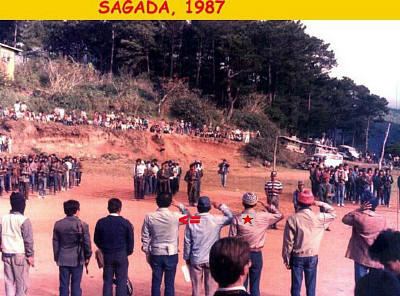
A visit to the field during the 1987 peace talks. Photo by Arkibong Bayan
Graphic: We’ve heard all the belligerent statements from all sides. Does this verbal hostility surface during face to face negotiations in Oslo?
Capulong: If the two panels were given autonomy, it won’t be affected by outside pronouncements. That’s why the NDF insisted the talks be held abroad, to minimize pressure.
Graphic: Including posturing
Capulong: Yes, grandstanding sa media. Talks that ignore these move faster.
Graphic: When angry statements are hurled, does it affect the atmosphere during negotiations?
Capulong: No, we all bring the Pinoy culture. Foreign oververs are amazed. People die in the Philippines and we smile at each other, share meals and swap souvenirs in Oslo. That’s Pinoy. You see that with the GRP old timers. Of course, everyone in the NDF is old timer. (Laughs)
Graphic: But the fact that there hasn’t seemed to be any change in NDF panel… is that good or is there need for change? Doesn’t the NDF need some new voices?
Capulong: Peronalities are not really relevant because everyone pushes one progrsam. There’s consistency. But yes, the personalities of the participants can help or burden the process.
Graphic: And Joma helps or burdens?
Capulong: (Laughs) Don’t believe the stereotype. Surprisingly, it’s Joma who’s the good cop. He’s always consistent in that role. If there’s a problem, it gets resolved when Joma comes in. That is how skilled he is.
Graphic: The good cop?
Capulong: (Laughs) Surprised? But that’s true. Ask the GRP panel; that’s also what they say… ask people from the Norway government and they will agree.
NDF wreath at Capulong’s wake
Graphic: However did you get to be involved with the NDF in the first place? No one’s born a people’s lawyer.
Capuong: Even before the NDF asked Flag, I had studied the program.
Graphic: You and the NDF guys are old friends?
Capulang: Yes, I knew Joma way back in 1971. I was a Concon delegate. Many personalities related with us and we didn’t ask if they were underground or legal. We just attended these discussion groups.
But even when I was secretary to Governor Eduardo L. Joson (of Nueva Ecija) from 1960 to 1969, I was already a people’s lawyer. I helped organize legal staff for farmers… I related to old Left, principally Masaka and the new communist party. Even after that split, I continued to help members of masaka. That’s why Masaka backed me.
I was elected on November 70, but would take the seat by June of the following year. I had seven months so I decided to improve my academic skills because practice erodes these.
Graphic: You went on immersion?
Capulong: Yes. (Laughs) At the UP library. And in good company… Carlos Garcia, Diosdado Macapagal, Raul Manlapus, Teofisto Guingona, my own Dean, Cinco, and two editors of the Collegian – Tony Tagamolila and Ed Gonzales.
Graphic: What issues pushed you to gravitate to people’s law?
Capulong: It was gradual until I reached crucial juncture… but the seeds were all there — class background, social background, and sensitivity to injustices. I was the son of a peasant.
I wavered between progressive and traditional. You tend to struggle with your ambitions. For a time I straddled both sides of spectrum… one foot sa traditional lawyering, the other foot in the progressive camp. Until I reached a point I had to choose. That was when my office was raided for second time on October 26, 1979 and I had to go into hiding and then escaped…
Graphic: How did you go to hiding?
Capulang: Mabigat. Simple. Deep hiding. Ang ibig kong sabihin, I wasn’t in the movement pero maraming kilala…(I wasn’t a part of the movement but knew many who were.)
It was Tony Tagamolila who called to warned about impending raids when martial law was declared. Another friend in media also called. By the time soldiers came to our house in UP Village, I was gone.
Graphic: Where did you hide?
Capulong: Just around Metro Manila. Different homes. I was with (former senator Raul)Roco. Other people had their own groups…Heherson Alvarez. Boni Gillego, Tony Pet Araneta…the progressive bloc of the Concon — Voltaire Garcia, Ding Lichauco, Joe Marie Velez…around 37; we were all in hiding but we’d get together from time to time.
Graphic: Was it the underground Left that hid you?
Capulong: (Shakes his head) We had no organization base, only friends. Then Roco thought of an idea. We printed pamphlets; we contacted the Left. We actually looked for them.
Graphic: It must have been a lonely time.
Capulong (Laughs and shakes his head.) We had friends, some in government, some in media. They would ask, ‘what do you need?’ The others would help but scold, ‘sinasabi na nga ba!’ (I told you so). And, of course, there was Sigma Rho.
Graphic: So brotherhood does pay?
Capulong: (Laughs) Sometimes. Enrile was defense chief. Angara worked for Enrile’s law office. Angara and I were friends, we had been dorm mates. Si Liwag, dating boss and colleague sa Concon; he’d reassure us, ‘akong bahala, kausapin si Marcos.’ He had independent efforts to get a memo clearing us.
Balancing act, from the website of SusanDaley
Graphic: Personal ties in a rainbow coalition?
Capulong: We used connections, yes. Our wives went to everyone, their counterparts … Mrs. Angara, Mrs. Enrile.
Sometimes, they faced humiliation. One time, Enrile snapped at my wife. “I cannot answer that question!” She was asking him for dossiers on what the government had against us.
When the government stabilized, ang temper Enrile okay na,di na masyadong bugnot, (Enrile’s temper cooled down and he wasn’t that grouchy anymore) They reviewed evidence, submit the memo, and the order to throw us in jail was lifted. This was around 1972. We were placed under house arrest.
Graphic: What was it like?
Capulong: Later, it became hard. You had to spend for your guards. They made me report once a week, just to say I wasn’t doing anything bad. I complied with their guidelines.
Graphic: There was nothing to report?
Capulong: Yes, I did not do nothing wrong when I resumed law practice. I’d go to the office with two guards… feed them, whatever, cigarettes. Hard, because I had very few clients, hardly any income.
But the guards and I got closer and one day, they just waved me off and stayed at home while I did my thing.
So I had the opportunity to meet up with Joma. This was 1973.
Graphic: Still in Manila?
Capulong: Bundok na
Graphic: You’re old friends, you had the right influences, experience… why didn’t you go underground?
Capulong: My passion, my love was lawyering. And now lawyerring for our people, poor, oppressed and exploited. That is my passion. That is where I pour all energy and that’s how I want to be known.
With my own son, Eduardo, I had a big debate. My son is a lawyer, professor of law, from Standford, he went to New York University where the climate is more liberal. I would protest that he was a lawyer but did the task of a cadre and an activist. I told him there are many non-lawyers with organizing skills, many who can do cadre work, but there were very few of us lawyers who could serve the masses through law.
Graphic: Always, the movement cast a long shadow.
Capulong: I thought it was complementary to relate with the kilusan. As a people’s lawyer, to be effective, you have to serve organized forces. Kung di sila organized, mas maganda ma-organize sila, politicised and helped to develop strong unity and militance. Mas maganda yun sa laban.
We help those objectives… Who organizes masa? The biggest group is the NDF, and then there are big legal mass organizations. We had to work together because we had a common beneficiary of services.
Graphic: Don’t lines of authority get entangled?
Capulong: If we handle a labor case for a union, there are the union officers, the organizers from outside, and there are the lawyers…Modestly aside, in these cases, I insisted in defining relations and mandate.
Graphic: That’s interesting… a fine balancing act
Capulong: Yes, you will need good relations, all three…you should know your mandate and respect others’….
Our objectives, for example; we have different priorities. What’s principal for one could be secondary for another. But we have to work together well. Fortunately, we have defined relations.
Graphic: Like how?
Capulong: We are an institution. We are not integral to the movement. We are not in-house counsel; we are external lawyers.
That’s a major difference… we deal at arms’ length with our client. Wala kaming dependence sa kilusan for our existence. (We are not dependent on the movement.) Operationally, we have our own policies and internal procedures. But yes, our politics is national democratic politics, which is legal, by the way.
Graphic: Not everyone sees things that clearly
Capulong: Our lawyers are free to embrace, to what extent they get involved with movement. But always, your time – and this is PILC’s basic principle – your time belongs to the center. The center takes care of your economic needs. Your contribution to our struggle is done through PILC in the form of legal service.
Which means bawal maging director or have a position in other organizations… on a case to case basis, some people ask permission; I have yet to grant this.
They’d say, it’s just a small job; they only need my name. As a mater of policy, bawal yun because our time belongs to PILC — our expertise, time and skills as people’s lawyer our contribution to struggle. If that is respected, you have an ideal relationship. And it is being respected.
Graphic: What kind of economic base do you provide?
Capulong: We are trying to be at par with small or medium sized law firms but di namin kaya. Relatively small but within middle class… their needs… certain level of income…our lawyers have cars, even if they have to buy on instalment or get it second hand. They may not yet be able to afford a house, but they are still young. Travel, of course, is a perk and we farm out opportunities to everyone. We don’t get anything from the NDF. First, that’s against policy. Second, as I’ve told the younger lawyers, we can look for other sources of income, but these people toil in the forests and the mountains and far-flung areas, and they don’t have income.
Graphic: Has there been conflict, like, say younger lawyers wanting or not wanting a client, or having ideas different from the client? How do you deal with that?
Capulong: In the handling and acceptance of cases, we have an evaluation committee, both for revenue generating and public interest cases.
It is true, there can be misunderstandings caused by generation gap. I am the oldest. I guess they have learned to accept my weaknesses, but still retain respect for me as their superior, the managing counsel. Not a big problem. They accept my weaknesses; I accept theirs. Working closely together helps forge unity. We’ve tested that at PILC. But yes, sometimes, a young lawyer will leave and it is only later that I hear of his or her sentiments.
Graphic: And what are your weaknesses?
Capulong: Authoritarian ako. Demanding sa tasks.
Kung ano standard sa akin, ganun sa kanila
Graphic: You’re all over the place; doesn’t your family resent that?
Capulong: I had problems before.
Graphic: Just what is demanding?
Capulong: Your time belongs to PILC. We have a daily time record aside from a log book, where you write down what you do, who you are servicing. We have a whereabouts chart. No matter where you are, the office should know. You must be accessible to clients at all times.
Graphic: Do you people have lives?
Capulong: (Laughs) Well, yes, the young lawyers wanted changes. I remain accessible sa client 24 hours; everyone knows that, knows my cellphone number, which hasn’t changed through the years.
The younger lawyers asked for a cut-off time… hanggang 8 p.m. lang. I agreed on one condition. Among ourselves we are accessible to one another, 24 hours.
Graphic: That is tough…
Capulong: There’s more. We have regular evaluation. How much time is input, or revenue earned. This is the principal of self-reliance.
I tell a new lawyer: You will have to generate your own income to maintain your life. Say, P25,000 a month plus appearance fees for paying clients. You raise that salary plus around 10,000 for upkeep — staff salaries, utilities, communications. So you know how much you need to contribute.
It works because our salaries are not delayed; we have not had to seek loans. (Laughs) But of course, every month is suspenseful. I always check. If funds are law, I do double time in our paying client base.
There are new initiatives now… in Central Luzon, the Lawyers for Public Interest, in Iloilo, Naga, Baguio and, surprisingly, Palawan though I have yet to check the situation there.
Graphic: Non-cadre work, cadre time and energy level. You’re no longer managing counsel?
Capulong: No more, just president.
Graphic: Is that preparatory to retirement?
Capulong: Yes. Three years ago, I said, there are things I have to do. Health — if I continue working that hard, I could have five years at most. I’d want some more time.
Graphic: Is the pool dwindling or expanding?
Capulong: We’re not into organizing. Always I say to clients and national leadership, one gauge of your strength is the ability to organize among lawyers. That’s your job, we can only give guidance.
Graphic: Are they listening to you?
Capulong: In 1991, the movement saw the IBP as hopeless, controlled by the establishment, the Sigma Rho. I told them it hasn’t been tapped, it remains the premier association, with stature and resources to help with major cases.
So I broke into the IBP leadership, first by becoming head of the Nueva Ecija chapter, then becoming a governor. (Laughs) I wanted the presidency but my brods blocked that. (Shrugs)
Still, I got a lot of support in proposing development and legal aid. That was approved unanimously during a meeting of the second highest policy-making body. I was actually surprised.
Graphic: So post-PILC work would be IBP?
Capulong: I want to concentrate on how to utilize the IBP to help masses; you don’t need ND politics for that.
Remember the IBP board passed a resolution supporting the termination of the US bases agreements. It was controversial but they did it. Enrile and (former senator Jovito) Salonga were so happy.
Now the IBP has a memorandum of agreement with Migrante and Migrante International. I am working on an MOA between IBP and Karapatan and Selda, and maybe putting up quick reaction team for Bayan during dispersals and arrests.
Graphic: You’ve had two decades, no more, relating with the NDF. You’ve seen the ups and downs, the push and pull of ideological forces. How to you manage to stay out of the fray? And how do you feel as a person and friend of all these people, including the newly dead?
Capulong: I have been privy to info material, access to all sides. But whether consciously or unconsciously, have not sat on any discussion about the debate. I was never invited by either side.
(After a long silence) When the problem erupted, I was in Japan with Nelia (Sancho) and Fidel (Agcaoili). We saw the CPP statement. Our instinct was, this is so sudden. They called and suggested for more time to resolve the issue. But official action had already been done, and Joma had gone public.
At that time, I had more clients with the rejectionist group, or maybe an equal number. Kintanar (Romulo, murdered last year), Bilog (Rafael Salas, now a businessman) who was then involved in the fight, Baylosis (Rafael, now a labor leader), Benjie de Vera, Joy Jopson (Kintanar’s widow). The peace process was not that active then.
I could only listen to all their stories. I kept my friendships but one my one, the RJ clients dropped out. I don’t know… and I feel really bad about this. I wish they’d done it other ways, both sides.
(I had met lawyer Romy Capulong while covering conflict and its fallout. But not until 2004, after this interview, did I get to know him well. Strange, but it was my true-blue capitalist pal, Yvette Lee, who made the introductions. She had met Romy while trying to untangle and solve environmental issues that dogged a former employer. She found him and his band of young lawyers at the Public Interest Law Center tough but reasonable – and funny. That was important to Yvette who bonded with Romy as they embarked in a venture to improve agriculture sustainability. That didn’t fly because of red tape and turf battles in the agriculture department. They went on to explore other possible projects – forestry, among others. Mostly, they just really liked each other. It was fascinating to watch these two spar on the state of the nation amid lots of laughter. Yvette never budged Romy’s beliefs and he never turned her into a leftist. But in all those leisurely lunches and dinners and outings, often with lawyers Marie Yuvienco, Jong Olalia and Rommel Quizon, we learned about the complex moves and the stories, tragic and funny behind the news headlines. In the last two years, we had badgered Romy about writing down his memoirs. He remained busy through his illness. We urged him to get a recorder and just dictate whatever came to mind. Then time run out. I guess we all will have to write his memoirs.)
A few hours after lauding the signing into law of the Cybercrime Prevention Act of 2012, saying it was society’s weapon against ‘irresponsible’ bloggers, the National Press Club retracted its statement and apologized to citizen journalists.
The retraction followed an outpouring of scathing remarks from both journalists and bloggers: The NPC’s fawning praise came at the expense of freedom of expression. It was also riddled with contradictions.
In its original statement, the NPC said it was part of the fight to decriminalize libel. Yet after assuring fellow citizens that Republic Act 10175 was all about catching criminals operating in cyberspace, the NPC issued an astounding claim:
“…responsible and legitimate members of the press should not entertain the thought that the law’s provision on libel would curtail or diminish our basic rights on freedom of expression and of free speech.”
“…. the target of the law’s punitive provisions, especially libel, are the so-called ‘bloggers’ and other unscrupulous authors of damaging remarks against any person. Many of these often anonymous elements are masquerading as ‘legitimate’ members of the press.”
“These are the people who hide in the cloak of anonymity by coming out with bogus Internet accounts to destroy other people’s lives and reputation.”
To be fair, the retraction and apoology is straight to the point. In a phone conversation, NPC Antiporda acknowledged the statement’s flaws and said the club had actualy meant cyber-bullies rather than the more generic term, bloggers. Here is the retraction sent by NPC president Benny Antiporda.
“The National Press Club of the Philippines retracts its statement lauding the signing of the Cybercrime Law (Republic Act 10175) into law by President Benigno Aquino III.
“The National Press Club also apologizes for any offense it may have caused to bloggers, citizen journalists and campus journalists, who may have felt included in the statements made by NPC president Benny Antiporda in the text of the NPC’s earlier statement.
“We sincerely apologize to the bloggers, citizen journalists and campus journalists whom our statement may have offended,” Antiporda said. “We intended no offense and we offer our sincerest apologies as we retract our statement.”
“What we wanted to stress in that statement was that there must be responsibility and accountability in making information public online, as well as offline, in other media” he said.
“Antiporda also said the NPC will continue its efforts to push for the decriminalization of libel so that the existing libel law under the Revised Penal Code.
“We will also continue to push for the passage of the Freedom of Information Bill,” he added.
It’s a brave new world, cyberspace. It carries great potential for good and harm. The next blog will discuss how a bill that should have focused on running after dangerous criminals ended with a sneaky attack on freedom of expression — at a time when the administration is turning its back on the campaign pledge to prioritize passage of the Freedom of Information Bill.
(Excerpt) CRAZED GENIUS OR SPOILED BOY? That’s a no-brainer for this Les Mis gal: Battles and revolutions, urchins and rebels dying at the barricades come before fantasy and romance.
JONATHAN ROXMOUTH and CLAIRE LYON lead the Manila cast of “The Phantom of the Opera”
Jonathan Roxmouth, 25, astounds as the Phantom. His voice is equal to any previous Phantom (admittedly, viewed only via youtube), with more nuance than Ramin Karimloo, star of the 25th anniversary show. It is his acting, however, that sweeps the audience away.
This Phantom is willful and arrogant. Yet, there is no petulance. When he toys with the Opera fat cats, hurling one impossible demand after another, it is with a deft touch of irony. He convinces us that it’s the logical behavior to show a world that has never listened to his appeals.
Anthony Downing’s Raoul is all puffed up posturing. (His voice isn’t that affecting anyway). Downing’s attack almost relegates Christine into a prop for a pissing contest with the Phantom.
It’s one thing to be bewildered by a sweetheart that hears voices. But this Raoul skirts so close to contempt; you wonder why he doesn’t just leave Christine to the Phantom’s tender mercies. Raoul is callow and, by all accounts, spoiled by his older brother. Still, Downing does too much hectoring and badgering of Christine; makes you wonder what fate awaits her once the threat of the Phantom no longer exists.
It is left to Claire Lyon and Roxmouth to carry the plot’s emotional core and save the night.
Roxmouth paints a mesmerizing portrait that is all shades of gray. His Phantom is ruthless, but the impression is of a man driven to desperation instead of a nihilist out to wreak revenge at the world. Mme Giry’s reluctance to paint him into a corner then makes perfect sense. This Phantom, too, is infused with a stillness — absolutely no extraneous gestures — that makes his episodes of rage all the more explosive.
It would have been too easy to play the Phantom as a crazed Pygmalion. Roxmouth’s Phantom honors Christine, shows her respect, agonizes at the choices he makes, making it easier for us to understand her ambivalence.
I’ve never appreciated “Point of No Return” so much. Lyon and Roxmouth generate so much heat it kinda empties the hall of oxygen. Then Roxmouth’s hands start trembling. Even knowing how the play ends, it is a heart-stopping moment, a gesture that, sans words, distills this tragic tale.
Roxmouth never gets self-indulgent. His discipline and focus exist solely in the service of the Phantom. Every breath and sigh, every twitch and turn, every note draws you into his world, his battered heart.
At the end of the musical, there was moment of silence as the audience crawled out from the dark pit. And then a roar swept through the CCP main theater, an ovation refused to end even when the curtain dropped the last time and the exit lights came ablaze. (This is an excerpt)
President Aquino swears in Rico Puno as Undersecretary for Peace and Order of the Department of Interior and Local Government. (Photo courtesy of Harvey Keh’s website)
Dedmabest describes official attitude towards Undersecretary Rico Puno of the Department of Interior and Local Government (DILG). Dedma is pretending a problem doesn’t exist, in the hope that it goes away. That’s how the administration of President Benigno Aquino III reacts when controversy hounds Puno. The guy has been untouchable since the day his gun-shooting buddy swore him into office. No way one goes around that. The latest incident involving the country’s Undersecretary for Peace and Order (that is NOT a joke) goes beyond the realm of high jinks and skirts the territory of crime. The President can’t ignore this, especially since the “victim” isn’t just the man he’s supposed to be “emotionally attached” to; it’s the government itself and the foundations of tuwid na daan
Tweet courtesy of Coco Alcuaz, of ANC
WHY THE RUSH?
Page from a a condo bldg logbook showing Usec Rico Puno and his men’s attempt to enter the residence of the late DILG Secretary Jesse Robredo the day after his death in a plane crash. (photo courtesy of TV Patrol and abs-cbnnews.com)
In Anthony Taberna’s exclusive report for ABS-CBN, witnesses and documents — logbooks of buildings — show that Puno and several companions tried to enter the offices AND the Quezon City RESIDENCE of the late DILG Secretary Jesse Robredo on August 19.
Social Welfare Secretary Dinky Soliman, who stayed with the Robredo family as they awaited news of Jesse, confirmed that phone call. Napolcom vice chair Eduardo Escueta also verified the attempt to enter Robredo’s Napolcom office.
Based on Taberna’s report, the operation was classic Puno: equal levels of confidence and incompetence. In the parallel reality called Punoverse, people must be really guillible and dugo-dugogangs reign supreme. It could be funny in a B-movie villain kind of way. Except when the context sinks in. Taberna’s source says President Aquino knew of the incident. He sent his Presidential Security Group (PSG) to stand guard over Robredo’s offices. Mrs. Robredo requested Justice Secretary Leila de Lima, among her husband’s close friends in the Cabinet, to secure his personal papers. I remember the flurry of activity around that time. Tempers heated up when journalists were barred from interviewing aides and officials who could explain the presence of the PSG. De Lima explained about Leni’s request, but not the reason for the urgency. Taberna’s sources claim Robredo had been investigating Puno when his plane crashed.
The President has remained silent. And we don’t know what to make of all this. Surely he’s not waiting for the two factions in his Cabinet — “Balay” under Roxas and “Samar” under Vice President Jejomar Binay and Ochoa — to go to war and see who survives to take the spoils? This isn’t just about internal squabbling. This is about accountability. The President must tell the public whether or not Robredo had informed him of the investigation into Puno. Otherwise those conspiracy theories that spread in the days following the crash could flare up again. Maybe due process prevented the President from sidelining Puno after learning of the Robredo probe. But for Puno to remain in place even after his aborted attempts to raid Robredo’s papers, calls into question the government’s commitment to tuwid na dawn. There doesn’t seem any doubt about Puno’s August 19 activity. It comes very close to obstruction of justice, generally recognized as criminal efforts to interfere with the work of police, investigators, regulatory agencies, prosecutors etc.In the Philippine context, obstruction of justice includes this:
b. Altering, destroying, suppressing or concealing any paper, record, document, or object with intent to impair its verity, authenticity, legibility, availability, or admissibility as evidence in any investigation of or official proceedings in criminal cases, or to be used in the investigation of, or official proceedings in, criminal cases.
Imposed during the pendency of an administrative investigation, preventive suspension is not a penalty in itself. It is merely a measure of precaution so that the employee who is charged may be separated, for obvious reasons, from the scene of his alleged misfeasance while the same is being investigated. Thus preventive suspension is distinct from the administrative penalty of removal from office such as the one mentioned in Sec. 8(d) of P.D. No. 807. While the former may be imposed on a respondent during the investigation of the charges against him, the latter is the penalty which may only be meted upon him at the termination of the investigation or the final disposition of the case. (Beja, Sr. v. CA, 207 SCRA 689, March 31, 1992 [Romero])
Sandoval underscores:
Preventive suspension pending investigation is not a penalty. It is a measure intended to enable the disciplining authority to investigate charges against respondent by preventing the latter from intimidating or in any way influencing witnesses against him. If the investigation is not finished and a decision is not rendered within that period, the suspension will be lifted and the respondent will automatically be reinstated. If after investigation respondent is found innocent of the charges and is exonerated, he should be reinstated. However, no compensation was due for the period of preventive suspension pending investigation. The Civil Service Act of 1959(R.A. No. 2260) providing for compensation in such a case once the respondent was exonerated was revised in 1975 and the provision on the payment of salaries during suspension was deleted.
The authorities considered the crisis a local crisis and therefore handled by the local CMC of Manila. The basic parameter being that the locality where the crisis is occurring will determine which CMC has jurisdiction. Thus, the crisis was handled by Mayor Lim as the Chairperson of the Manila CMC. It appeared that at no point was the elevation to the status as a national crisis considered even while practically all the hostages were foreign nationals and even while representatives from foreign embassies or consular offices were already involved. The Implementing Rules and Regulations (IRR) on Crisis Situations does not have clear parameters on when, or under what circumstances, should a crisis be elevated to national status. It is also not clear as to which agency, or who in the bureaucracy, will initiate the elevation of the crisis to national status. Will it be by endorsement or initiative of the local CMC or will the elevation be through a “take over process” initiated by the national agency concerned? It is also not clear on what is the scope of the authority of the CMC. Is it advisory or does it make a decision based on consensus of the members of the CMC which decision is then to be implemented by the Ground Commander?
Undersecretary Rico E. Puno
Interior and Local Government Undersecretary Rico Puno revealed that he was the caretaker of the national crisis management committee, and that the local crisis committee was headed by Manila Mayor Alfredo Lim, although Puno said that he did not receive any order activating the local CMC. During the entire course of the hostage incident, he admitted getting in touch with the local CMC three to four times only. Usec. Puno cannot and should not have acted as “caretaker” of the national crisis committee because the rule provides for the following organizational structure to which his position as Undersecretary is not found… It is the conclusion of the Committee that, the improper assumption by Usec. Puno of the functions of the Secretary of DILG as the chairman of the National Crisis Committee, in the light of his admitted lack of training and experience, may have compromised the readiness of the national CMC to take over the responsibility when it became apparent that the local CMC could not properly handle the hostage situation. That readiness could have been the immediate answer to the worsening situation. Puno’s failure to call upon the other members of the national CMC to be on standby reflects this lack of capacity. While he may have good intentions, rules must still be followed, and the organizational structure of the national CMC must be maintained. (boldfont mine)
Presidential Communications Operations Secretary Herminio “Sonny” Coloma said Puno has the experience and skill to oversee various agencies under the Department of Interior and Local Government (DILG) such as the Philippine National Police, the Bureau of Fire Protection, the Bureau of Jail Management and Penology, and the Philippine Public Safety College…. Coloma said critics who question Puno’s leadership skills should “justify their claim”.
In the aftermath of the hostage crisis, Mr. Aquino spoke scathingly in public of local police officials who botched the rescue of Hong Kong tourists. But he defended Puno, who had claimed to have been his eyes and ears, and Verzosa, who had left Manila just before the standoff entered its bloody end-phase. Of Puno and Verzosa, Mr. Aquino said their big contributions to his anti-corruption campaign should be given weight rather than the lone debacle of the hostage crisis. Yet the Ombudsman has charged Verzosa’s wife among those who illegally tried to bring personal funds to Europe during an October 2008 Interpol congress in Russia. Given the Ombudsman’s charges, the testimony of Verzosa before a Senate inquiry, that the 105 euros (P6.5 million) were from the police vaults, merited new scrutiny. Yet on this and other controversial issues, Mr. Aquino has remained mum.
He admitted receipt of the letter. He also said he did not give it the time of day, seeing it as part of a plot by detractors. “Hindi ko pinansin, eh. Dahil hindi naman ako involved, eh. Sigurado naman akong black ops yan. Eh hindi ko sila kailangan kausapin. Malinis ang kunsensya ko. Hindi ko kailangan na habulin pa yan o imbestigahan dahil alam ko na ang kulay nila.” (I didn’t give it my attention since I am not involved. It’s a black operation. I do not need to talk to them. My conscience is clear. I don’t need to hear their side because I know their color.) This is breathtaking in its illogic and irresponsibility. Critics will always be around. In refusing to even acknowledge a letter and order by his superior, just because he believes it is part of some vague, obscure plot, Puno sounds more like a Cabinet official of the former President Gloria Macapagal-Arroyo than a very dear friend and trusted aide of the man who told the nation, “Kung walang kurap, walang mahirap!” (Without corruption, there will be no poverty.)
photo courtesy of wn.com
We will not know, until the government offers information, just what Robredo was probing. Some newspapers have claimed it was jueteng. Other newspapers say Roxas has mentioned Puno in the same breath as jueteng. I only know that the government cannot afford to pretend that the events of August 19 did not occur or pretend Puno had no involvement. Puno isn’t just anyone. He is one of the President’s most trusted friends.
Here is Puno’s background:
Puno’s curriculum vitae, which the Presidential Communications Office gave to journalists, shows that the DILG deputy chief was a “long-time consultant” of then-Senator Benigno Aquino III in the upper chamber’s Committee on Public Order and Safety and Dangerous Drugs and Special Oversight on Economic Affairs body. According to the document, Puno “reviewed and analyzed the pertinent laws and polices of the Dangerous Drugs Board,” and advised Aquino in the Senate Committee on Public Order and Safety. He also served as the “overall ground commander” in Aquino’s 2007 senatorial campaign. Puno was president of Far East Ballistics Corporation from 1992 to 1995, where “he implemented polices for improvement and development in the production of ammunition.” He was also board member of the National Range Officers Institute at Philippine Practical Shooting Association, and was involved in the staging of shooting competitions in the country and abroad.
My 2010 post on jueteng ended with a question: Does Mr. Puno realize what his statements say of Mr. Aquino? Does he even care? Today, we have to ask the President: Sir, do you realize what silence in the face of Puno’s actions says? UPDATE A follow up report has Leni Robredo confirming the attempt to enter their QC residence: Verbatim from abs-cbnnews.com: “Totoo yon na yung kasambahay namin sa Manila, siya lang yung naiwan sa bahay dahil umuwi yung mga anak ko. Tumawag ng Augsut 19 nagsasabing may mga tao, hindi niya sinabi kung sino, may mga taong gustong pumasok at may hinihingi na mga papeles. Parang nagtatanong siya sa akin kung papapasukin niya. Ang sabi ko hindi,” she recalled. “Tamang-tama katabi ko si [Social Welfare] Secretary Dinky [Soliman]. Nagpatulong na ako at ipinaubaya ko na kay Secretary Dinky yung pag-asikaso ng problema. Until now, hindi ko pa nababalikan,” she added. Robredo said she also asked the help of Justice Secretary Leila de Lima who later secured documents at the condo unit. “Kung may sensitive documents dun, hindi magiging secure ang mga tao dun kung babalik-balikan sila,” she said.
And here’s De Lima claiming she knows nothing about the raid, again verbatim from abs-cbn.com
“I don’t have that report… I’m not in the position to confirm anything on that… I’m just heeding the request of Mrs. Robredo to secure documents na meron sa condo. Magtatanong tanong lang muna ako siguro about that. Sa mga ganyang report na may pumunta doon, I’m not privy to that,” De Lima said.
De Lima added that she has no idea about what documents Puno’s group was reportedly attempting to obtain. She added that the matter is not under the jurisdiction of the Dept. of Justice (DOJ), thus, any probe into the reported attempted raid will not involve the department.
An ABS-CBN News source bared the documents may have pertained to an ongoing investigation Robredo was conducting on Puno and several Philippine National Police (PNP) officials.
House-sized waves, fickle sea swells and rowdy guests.
What’s life like for the crew of WWF’s premier research vessel in the Philippines?
**The world is full of brave souls who like climbing higher, diving deeper, driving faster, walking farther or doing whatever it takes for that great adrenalin rush. The crew of the World Wildlife Fund’s premier research vessel in the Philippines have the hearts of adventurers and channel their energies and derring-do in service of this little globe we call home. Except for this intro note, I do not own — or seek to claim — a single word in this post. All credit goes to WWF-Philippines; please acknowledge the organization when you share. It was sent by the group’s communications and media manager, Gregg Yan. Here is his introduction:
“Ever been stuck on a boat rockin’ and rollin’ on ten-foot high waves? Well, these guys eat ten foot waves for breakfast!
Seven-strong, the crew behind WWF’s main research vessel in the Philippines (M/V Navorca) has been dubbed the ‘Ocean’s Seven’ for their camaraderie and efficiency. They are the behind-the-scenes heroes who keep the vital lifeline between Puerto Princesa and the country’s most productive coral reef – Tubbataha – alive.
It is now their turn to tell us their sea stories. Please feel free to edit and publish this as you see fit.”
M/Y Navorca Captain Ronald ‘Kap’ de Roa at the helm. “Strong coffee and cigarettes keep me awake on long nights,” he shares. (Gregg Yan / WWF-Philippines)
For the crew of WWF-Philippines’ premier research vessel, another workday is clocked in – 100 kilometres from the nearest island or Bundy clock.
While many of the M/Y Navorca’s sea tales have been recounted, the trials of her crew have remained largely untold. So what’s life like for the crew behind WWF’s sole floating office in the Philippines? Landlubbers, let’s find out.
Sailing the Sulu Sea
Taking off from her predecessor M/Bca (motorized banca) Minerva, M/Y (motorized yacht) Navorca provides transportation services for WWF conservation initiatives in the Sulu Sea, particularly in the Tubbataha Reefs Natural Park and nearby island municipality of Cagayancillo.
Painted panda black-and-white, it’s sturdy wood-and-fiberglass hull spans 80 feet and displaces 70 gross tonnes. Up to 12 passengers can be accommodated in bunk-beds, with two weeks’ worth of fuel, water and food onboard.
The vessel was acquired in 2008 and through a partnership with the Grieg Shipping Group, Grieg Foundation and WWF-Norway – was recently refitted with state-of-the-art navigation and communications equipment.
Led by WWF-Philippines Tubbataha Reefs Project Manager Marivel Dygico, seven souls keep the ship afloat – Dondon Cayanan, Herlito Dagaraga, Arnel Escobin, Jun Gayoma, Jun Magbanua, Jeruel Magellan and Captain Ronald de Roa. The team has been dubbed ‘The Oceans 7’.
Aye ‘aye, Cap’n!
M/Y Navorca Captain Ronald ‘Kap’ de Roa at the helm. “Strong coffee and cigarettes keep me awake on long nights,” he shares. (Gregg Yan / WWF-Philippines)
“Ever seen waves as large as houses?” asks M/YNavorca Captain Ronald ‘Kap’ de Roa – a slight man with a quiet demeanor and alert eyes that constantly scan the horizon. “Sailors call the giant waves gulong because ships have to roll with them just to stay afloat. Off Antique’s coast in 2008, we had to navigate through gulong waves for days. Definitely not for the faint-hearted!”
‘Kap’ as everyone calls him, started his WWF career in 1999 as a rating or crewman of WWF-Philippines’ first research vessel, the M/BcaMinerva. He rose to captain it in 2003 and helmed the new M/YNavorca in 2010.
“Always be alert. A captain has to constantly monitor everything – from the position of the ship to the direction of the current. When bad weather hits – and it always does in the Sulu Sea – you have to work doubly-hard to ensure the safety of everyone onboard.”
“Fortunately, this ship comes complete with navigational aids,” beams Kap as he shows off the ship’s GPS unit, depth sounder, long distance single-side-band (SSB) radio, short distance very-high-frequency (VHF) radio, radar screen, nautical compass and other tools of the maritime trade. I’m impressed. Jack Sparrow’s magic compass would be put to shame.
Master Chef Tubbataxic
From pan-seared tuna kebabs to chocolate ice-cream (yep, you read right) served on freshly-chopped coconut shells, the magical hands of Jeruel ‘Weng’ Magalona conjures them all.
“Tuna kebabs are my specialty,” reveals soft-spoken M/Y Navorca boat chef Weng Magalona. “It’s always a hit.” (Gregg Yan / WWF-Philippines)
At 27, Weng serves as the ship’s resident chef and is seldom seen on-deck – working tirelessly to whip up restaurant-worthy entrées for the M/Y Navorca’s guests. Weng was a cook for various Palawan restaurants and pension-houses before joining the crew. His house specialty?
“Tuna kebabs,” he whispers excitedly. “I choose only the choicest Yellowfin tuna cuts and pan-sear the cubes with white onions, roasted peppers and my secret version of lemon-butter sauce. It’s always a hit.” Having wolfed down five sticks during his four-minute interview, I couldn’t agree more.
All Hands on Deck
Four crewmen – all veteran hands – keep the ship tip-top. The tasks of Dondon Cayanan, Arnel Escobin, Jun Gayoma and Jun Magbanua range from operating the chase boat for divers to conducting instant field-expedient repairs in all weather conditions.
Veteran M/Y Navorca crewman Dondon Cayanan often serves as both boat tender and dive master. With his freaky fish skills underwater, he spots hidden moray eels and spiny lobsters with ease. (Gregg Yan / WWF-Philippines)
“A ship at sea must be self-sufficient – so everyone should learn and offer varied skills,” explains shirtless Arnel while plastering a cracked pipe-fitting with freshly-kneaded marine epoxy. “Today you’re a painter, tomorrow a dive master – it’s really dynamic.”
Engine Master Herlito ‘Lito’ Dagaraga has been working on engines since 1969. “I can fix anything,” he beams. Hot and loud, the engine room proves no place for the soft. (Gregg Yan / WWF-Philippines)
Herlito ‘Lito’ Dagaraga not only looks like Morgan Freeman – he literally keeps the boat running. At 63, the 4th-class Marine Engineer is the ship’s oldest hand and its engine master – always working below decks to cajole the boat’s three engines to optimal levels.Herlito ‘Lito’ Dagaraga not only looks like Morgan Freeman – he literally keeps the boat running. At 63, the 4th-class Marine Engineer is the ship’s oldest hand and its engine master – always working below decks to cajole the boat’s three engines to optimal levels.The crew rotates tasks. Jun Gayoma for example, serves as the finishing carpenter, able to repair the woodwork. Jun Magbanua serves as a navigator, having helmed the M/BcaMinerva before Kap’s time.
The friendliest perhaps – is Dondon, a veteran diver who often acts as both guide and chase boat tender on dive trips. Dondon is unique for having served aboard the M/Y Navorca’s three-man crew (which included two owners) long before it was acquired by WWF.
“With gulong waves, squalls and unpredictable currents, sailing the Sulu Sea can be rough –but we’re prepared for anything. After all, there’s nothing more important than our guests’ comfort and safety.”
Veteran crewman Arnel Escobin applies marine epoxy to a cracked pipe-fitting. In the rocking extension of WWF that is the M/Y Navorca, one’s crew is one’s family. (Gregg Yan / WWF-Philippines)
On cue, Jun Magbanua expounds on the ship’s save-our-lives-at-sea (SOLAS) gear. “We have an inflatable raft for 20 people, smoke signal flares, first aid kits, axes, fire extinguishers …”
Behind-the-scenes Heroes
“Without the efforts of our crewmen, WWF wouldn’t be able to help conserve Tubbataha,” reveals WWF Tubbataha Reefs Project Manager Marivel Dygico. “They are truly our behind-the-scenes heroes.”
Right smack in the Sulu Sea lie the twin atolls of Tubbataha – one of the country’s Great Reefs. Here, fish biomass breaches 200-tonnes per square kilometer. This is five times greater than the productivity of a typical healthy reef, enough to seed eastern Palawan and the adjoining Visayan sea with fish and invertebrate spawn.
Before it was declared a National Marine Park in 1988, Tubbataha’s residents have long suffered from exploitation, with generations of fishermen gathering not just fish, but turtles and bird eggs as well. Together with the Tubbataha Management Office (TMO), WWF and the crew of the M/Y Navorca stand steady on the parapets of conservation.
Night falls on the Sulu Sea after a hard day’s work. With all guests fed and bedded down, with all lines secured and situation reports dispatched, the crew finally finds time to unwind. Some gather on the ship’s port or left side to exchange sea tales, while Arnel and two others play puzzle games on a laptop near the head or bath area.
Halting at the ship’s bow or nose, I gaze out the darkness, noticing a faint veil of stars dappling the Sulu Sea’s undulating expanse of waves.
“The sun, moon and the never-ending stretches of ocean offer a unique kind of freedom on the high seas,” says a smiling Kap, holding two steaming mugs of coffee. “I wouldn’t trade this for anything.” (30)
Mr. Aquino did not challenge Corona’s appointment. That was understandable, given his belief that the High Court was packed by loyalists of Mrs. Arroyo. The new President chose another Justice, Conchita Carpio-Morales, to administer his oath of office and later appointed her as Ombudsman. He never looked back, especially after the Court shot down his first executive order, creating a Truth Commission. It would have been chaired by one of their own, former Chief Justice Hilario Davide Jr. The SC said the Commission was selective in its mission.
So, yes, this was all about one man. At least, that’s how it started. At least, that’s what we, the people, were told.
But even as accusation after accusation was hurled, it soon became clear that Corona was not the only one under trial. The speed by which House of Representatives impeached Corona was matched by the fast and furious pace of bungling of its prosecutors. This caused a dip in public interest in the impeachment trial.
Worse, with unethical conduct and tactics better suited to the venal government replaced, the prosecution and the land’s highest officials left people bewildered: Who were the bad guys here?
Found wanting
Indeed, as the Senate impeachment cast its historic 20-3 guilty vote, making Corona the first Supreme Court justice to be ordered stripped of his office, the judges poured an almost equal amount of scorn on the prosecution. They also confronted Mr. Aquino for throwing its weight behind the prosecution, the media for allowing itself to be manipulated by the contending parties. Some of the harshest words were received for good-governance activists who, perhaps believing the end justified their means, joined in the peddling of what some senators called illegally-acquired documents.
The senator-judges also obliquely criticized their own performance. And rightly so.
There were days the country stayed glued to their television sets, watching the senator-judges demolish the prosecution’s legal arguments. (Enrile said he felt “personally frustrated, terribly frustrated” by the weak case, which was built up only after charges were filed.) But as dazzling as the display of intellect was, some of the most brilliant showed the emotional quotient of hell hounds. Some judges also acted like paid consultants of the House of Representatives, picking up the ball dropped by the prosecution.
Voting “not guilty”, Sen. Joker Arroyo railed that the Senate court was being asked to pass “a bill of attainder”. He defined this as a “legislative act of convicting an accused of acts that were not offenses by the very measure by which he was condemned.”
Sen. Villar, who also raised his own experience at being on the receiving end of bad publicity, said:
“Ako ay nalulungkot din at sana hindi na mangyari sa mga darating na panahon, na ang iligal na pagkuha ng mga ebidensya ay parang normal o binabalewala natin. Napakahalaga po niyan sa ating sistema ng hustisya. Napakahalaga na ang isang ebidensya na hindi legal ang pagkuha ay hindi pwedeng tanggapin… At huwag na rin sanang maulit iyong walang pakundangan na paggamit ng mga ahensya ng gobyerno. Mahalaga rin po na mahalin natin ang kalayaan ng ating mga institusyon. Iyan po ay magpapalakas n gating demokrasya.” (I am saddened and hope that in the future we do not treat the illegal procurement of evidence as normal. That is of crucial importance to our democracy, that evidence illegally obtained are not accepted. And I hope we do not see a repeat of ruthless use of government agencies. It is important to love the independence of our institutions. That will strengthen our democracy._
Enrile, who spoke last and gave a summation of the trial, raised the same issue:
“the indiscriminate and deliberate and illegal machinations of some parties who have been less than forthright with this court in presenting dubiously procured and misleading documents spread to media to influence court and public opinion…” He also bewailed “a penchant to engage in trial by publicity and use media to disseminate information or evidence to provoke or disrespect this court.”
Sen. Ralph Recto, a member of the ruling Liberal Party, described the prosecution’s case as “articles served half cooked instead of well done.” He also said the way they produced evidence “left a bad taste in the mouth.”
His own worst enemy
No matter the prosecution’s pratfalls, the 20-3 guilty verdict was a stunning blow to the Chief Justice. Failure to declare his correct Statement of Assets, Liabilities and Net worth (SALN) was always the prosecution’s strongest case. Still, Corona’s lawyers admitted they had not expected so wide a margin.
Corona showed a startling, self-destructive streak. Why would anyone take a battle contained on one front and spread it to another? Activists had filed a case against him with the office of the Ombudsman. He could have played that out. But, irked by the leaked letter, he told his counsel to subpoena Carpio-Morales as a hostile witness. She came, with a powerpoint report, allegedly based on documents supplied by the Anti-Money Laundering Council.
Did the case filed by activists with the Ombudsman provoke the Batangeno’s macho pride? Did the initial bumbling by prosecution lawyers in the impeachment trial make the defense overconfident? A combination of both is at the root of Corona’s troubles. And then there’s hubris. Impunity will do that, see. Getting away once, twice, thrice… can lull one into believing it can be forever. As they say in basketball, the loudest jeers are reserved for those who dunk into the opponent’s goal.
But Corona did more than that. He throttled himself. He turned his great star turn into a moment of farce. He offered a waiver on the secrecy of his bank accounts. Then he ruined the gesture by demanding the 188 signatories of the impeachment complaint and pet peeve, Sen. Franklin Drilon, do the same. And he capped that with a walk out, later claiming to have suffered a drop in his blood sugar.
It doesn’t take a bar topnotcher to see through that. Had Corona offered the waiver unconditionally, at the start, we would all have patiently waited through a three hour performance. It featured another reprise of the unlikely Hacienda Luisita angle, a particularly nasty family feud and claims of an ordinary lifestyle alternating with boasts about family wealth. It wasn’t so much the tears — by all accounts, Corona is very close to his family. It was that he had priorities all wrong. And that, more than anything, raised public doubt into irreversible levels.
A chastened Corona would later return to offer an unconditional waiver. But hearts and minds had hardened. Neither the defense nor the prosecution bothered to call in AMLA officials. As Enrile stressed, while the waiver was laudable, truth would have been served better had he just submitted his bank documents to prove Carpio-Morales wrong.
The senators actually bent backwards for Corona. They chose to focus on his admission — four, not 82 dollar accounts, “just” $2.4 million and not $10 million; “only” P80 million instead of over a couple of hundred million pesos. But the figures were too large, and the violations so consistent through the years, for the senator-judges to dismiss.
In their guilty verdicts, the 20 senator judges stressed the following:
There is no conflict between the law on secrecy of foreign deposits and the law covering the disclosure of SALNs;
While banks and third parties are banned from revealing people’s dollar deposits, the account holder is free to share this information;
Corona’s tale of co-mingled funds goes against the natural grain of things — parents often leave their cash to children, not the other way around;and
The Constitution trumps special laws.
“How can one man use the same constitution which mandates full disclosure to hide his assets?” asked Sen. Teofisto Guingona III. “This is constitutional perversion in its ultimate form.”
“Half truths are no better than lies,” said Sen. Panfilo Lacson, who gave a higher figure on Corona’s undeclared wealth and punched holes into the facts offered up by the Chief Justice.
Sen. Pia Cayetano said Corona’s example, if allowed to pass, would set “a deadly precedent… that would allow any official to hide assets (behind the secrecy safeguards on foreign currency).”
“Kaya ba natin tanggapin… na ang $2.4 million pag nasa safety deposit box kailangan -declare pero pag convert sa dollar, hindi kailangan?” said Sen. Alan Peter Cayetano.
“The truthful disclosure of SALN is key fundamental … the centerpiece principle of democracy,” Sen. Loren Legarda pointed out. “Disclosure of SALN is the only window by which the public can judge whether we, as public officials, earn the public trust… it is not simply an administrative entitlement by officials… If we acquit, we would lift floodgates …. and lower the bar of public accountability.”
Enrile chastised the defense for allowing Corona to revisit a prosecution issue already disallowed by the Senate impeachment court. He stressed the Chief Justice was not being accused of amassing illegally-acquired wealth. But to all but three of the senator-judges, no reason existed on earth to justify why Corona had kept huge wealth under wraps. In the end, he gave the numbers needed to take him down.


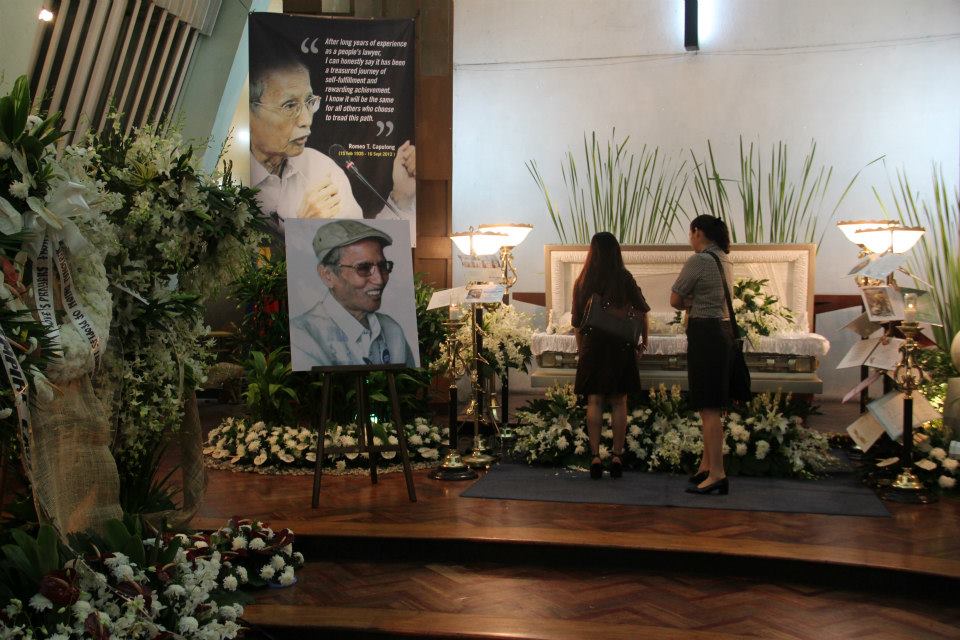

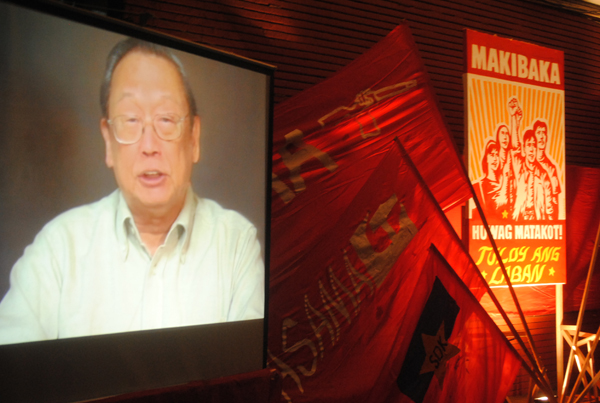
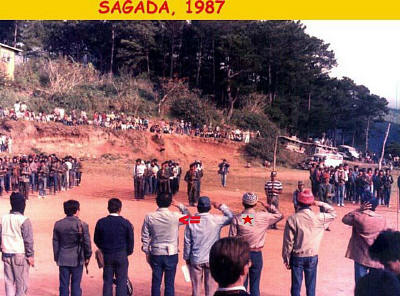
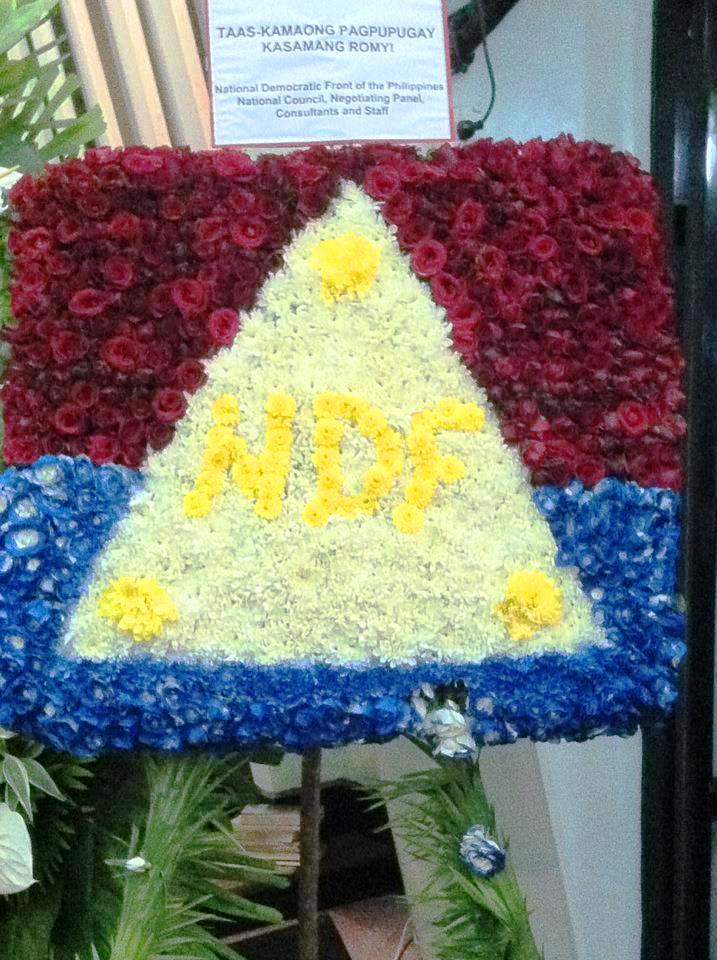

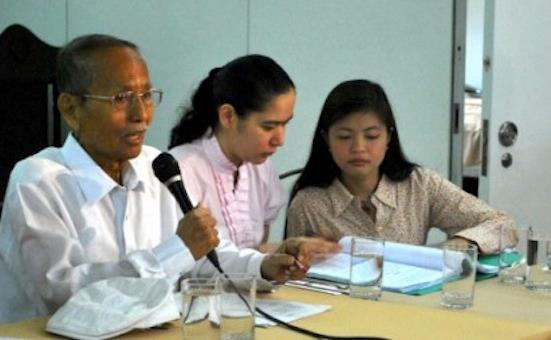


 indayvarona